.png)
Unlocking the Future: Benefits of 4G/5G Cellular Data Loggers in Logistics Agriculture and Industry
In today’s fast-moving world, staying connected to critical equipment and processes is no longer a luxury but a necessity. Cellular data loggers with 4G and 5G connectivity are transforming how businesses in logistics, agriculture, and industry monitor and manage their operations. These devices link various sensors and equipment directly to the cloud, enabling real-time data access and smarter decision-making. This post explores how cellular data loggers work, their key applications, and the advantages of remote monitoring and data visualization through platforms like ProSight.
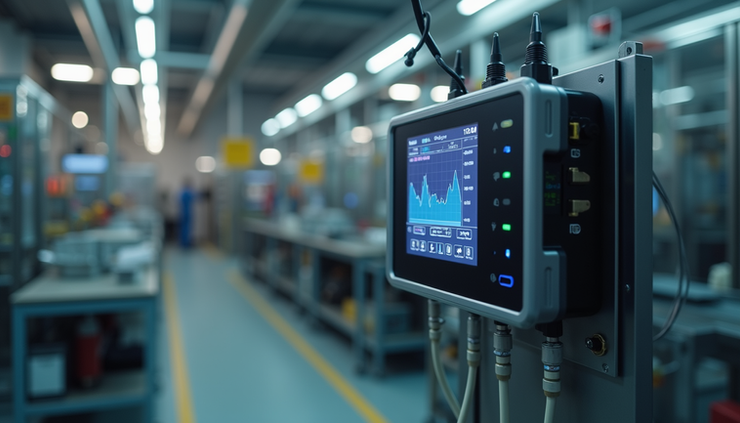
How Cellular Data Loggers Connect Equipment to the Cloud
Cellular data loggers serve as bridges between physical sensors and cloud-based monitoring systems. They collect data from a variety of inputs such as:
4-20mA current loops: Common in industrial sensors measuring temperature, pressure, or flow.
0-10V voltage signals: Used for analog sensors and control signals.
Relays and switches: For detecting on/off states or controlling devices remotely.
RS485 communication: A serial protocol widely used in industrial environments for connecting multiple devices.
Once connected, these loggers use 4G or 5G cellular networks to send data securely and instantly to cloud platforms. This direct connection eliminates the need for wired networks or local data storage, reducing infrastructure costs and complexity.
Applications in Logistics
In logistics, timely and accurate data is crucial for managing supply chains, fleet operations, and warehouse environments. Cellular data loggers help by:
Tracking temperature and humidity inside refrigerated trucks or storage facilities to ensure product quality.
Monitoring vehicle conditions such as engine temperature or fuel levels through sensor inputs.
Detecting door open/close events via relay or switch inputs to improve security and inventory control.
Providing real-time alerts when conditions deviate from set thresholds, allowing quick response to prevent losses.
For example, a cold chain logistics company can use cellular data loggers to continuously monitor refrigerated containers during transit. If temperatures rise unexpectedly, the system sends an alert through ProSight, enabling immediate action to protect perishable goods.
Applications in Agriculture
Agriculture benefits greatly from remote sensing and automation. Cellular data loggers enable farmers to:
Monitor soil moisture and nutrient levels using 4-20mA or 0-10V sensors to optimize irrigation and fertilization.
Track weather conditions such as temperature, humidity, and rainfall.
Control irrigation pumps and valves remotely through relay outputs.
Collect data from multiple fields without the need for extensive wiring or local data collection points.
A vineyard, for instance, can deploy cellular data loggers across its fields to gather soil and climate data. This information helps farmers decide when and how much to irrigate, improving water use efficiency and crop yield.
Applications in Industry
Industrial environments often involve complex machinery and processes requiring continuous monitoring. Cellular data loggers provide:
Real-time data from sensors measuring pressure, temperature, flow, and vibration.
Integration with existing control systems via RS485 or relay interfaces.
Remote monitoring of equipment status and alarms to reduce downtime.
Data logging in hazardous or remote locations where wired networks are impractical.
For example, a manufacturing plant can use these loggers to monitor critical equipment health. If a motor’s vibration exceeds safe limits, the system triggers an alert, allowing maintenance teams to intervene before a breakdown occurs.
Advantages of Remote Monitoring and Data Visualization with ProSight
ProSight is a cloud-based platform designed to work seamlessly with cellular data loggers. It offers several benefits:
Centralized dashboard to view data from multiple devices and locations in one place.
Customizable alerts and notifications sent via email or SMS.
Historical data storage for trend analysis and reporting.
User-friendly visualization tools such as graphs, gauges, and maps.
Secure access from any device with internet connectivity.
This remote monitoring capability means operators no longer need to be physically present to check equipment status. They can make informed decisions quickly, improving operational efficiency and reducing costs.


