Wetland Restoration Monitoring: Planning a Water Level Recording Network
A wetland restoration monitoring plan works best when the measurement network is designed around the decisions it must support. The objective might be documenting inundation after works, comparing areas within a site, or investigating how surface-water conditions vary through the seasons.
Write the evidence question first
Identify the observation needed to assess the project and the timescale over which it should be collected. Define the comparison period and the important locations. A proposed network should explain why each point exists, who owns it and what will happen if its data are unavailable. Avoid treating sensor count as a substitute for a sampling design.
Distinguish surface and subsurface observations
Surface-water monitoring and groundwater monitoring can require different installations. If piezometers or wells are proposed, document their construction and reference elevations with appropriate technical input. Wetland hydrology concerns the timing, duration and frequency of wet conditions; agree how those features will be derived and reported.
Choose equipment for each environment
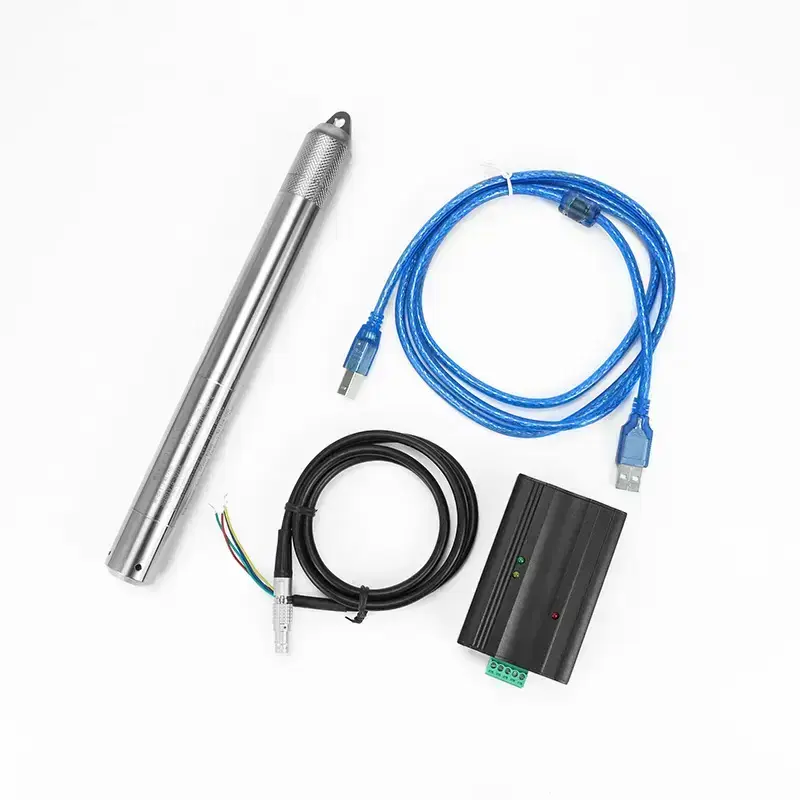
A self-contained PWL755 recorder can suit a location where the team will collect stored records during field visits. Use the appropriate freshwater configuration for a freshwater site and assess the titanium marine option for saline or tidal locations. Confirm measuring range, pressure reference and material compatibility for each point rather than assuming one configuration suits the entire project.
Make servicing part of the design
Create an installation register containing serial numbers, ranges, clock settings, reference points and photographs. Plan manual check measurements and a servicing schedule based on access and site conditions. Include a method to recognise dry periods, disturbed installations and blocked pressure ports. Specify barometric correction where absolute-pressure loggers are used.
Build a usable handover
Define who downloads data, who reviews it and where raw and corrected files are stored. Request a quotation that separates instruments, deployment hardware, installation, survey and optional telemetry. Live dashboards can be considered as a separate system requirement. A simple, well-managed field-download network can be more useful to a research team than an inadequately specified remote system.