.png)
Planning a Dragino LoRaWAN Network for Farms and Industrial Sites
A LoRaWAN network can cover large areas with low-power sensors, but coverage is never automatic. A paddock, shed row, processing yard, quarry, winery, depot or industrial block can look simple on a map and behave very differently over radio.
The best network plan starts with the property itself. Where are the assets? Which sensors must report often? What sits between each monitoring point and the gateway? Where can equipment be mounted safely, powered reliably and maintained without disrupting daily work?
For farms and industrial sites, Dragino devices offer a practical path into long-range monitoring. They can support applications such as water tank levels, pump status, soil data, weather readings, gate alerts, cold storage checks and machine condition monitoring. The network still needs careful planning before a larger deployment.
ProSense Solutions approaches this work by looking at the whole site, not only the hardware. Buildings, terrain, antenna height, gateway backhaul, access for servicing and future expansion all shape the final result.
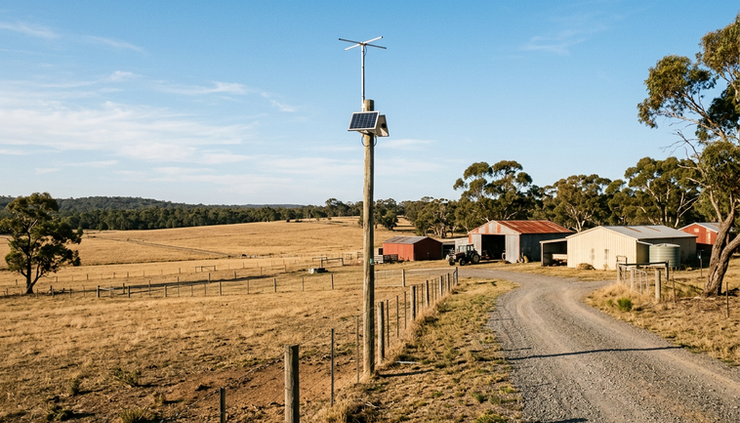
Start with what the network needs to report
Before choosing a gateway location, define what the network must do. A site that only reports tank levels twice a day has different needs from an industrial facility that tracks door status, refrigeration temperature, vibration alerts and pump faults.
The first planning step is to list each monitoring point and its purpose. That includes fixed assets, mobile assets if relevant, and areas where sensors may be added later.
Common monitoring points include:
Water tanks, troughs, bores and pumps
Weather stations and soil probes
Machinery sheds and fuel storage
Cold rooms and processing areas
Gates, fences and remote access points
Sumps, drains and wastewater systems
Silos, bins and storage vessels
Equipment rooms and utility areas
Each point should have a rough reporting profile. Some sensors can send low-frequency updates. Others need faster alerts when a threshold changes. This affects battery life, network load and the level of coverage confidence required.
For example, a tank level sensor on a remote ridge may not need frequent messages, but it must still report dependably. A temperature sensor in a cold room may sit close to power and network backhaul, but the building structure can make radio transmission harder.
A useful plan separates monitoring points into three groups:
Priority | What it means | Planning focus |
Critical | Alerts that affect safety, stock, production or compliance | Strong signal margin and clear maintenance access |
Operational | Readings that support day-to-day decisions | Consistent coverage and sensible reporting intervals |
Future | Likely additions after the first rollout | Room for gateway capacity and flexible placement |
This simple ranking helps avoid overbuilding in low-risk areas while giving more attention to the points that matter most.
Map assets before placing gateways
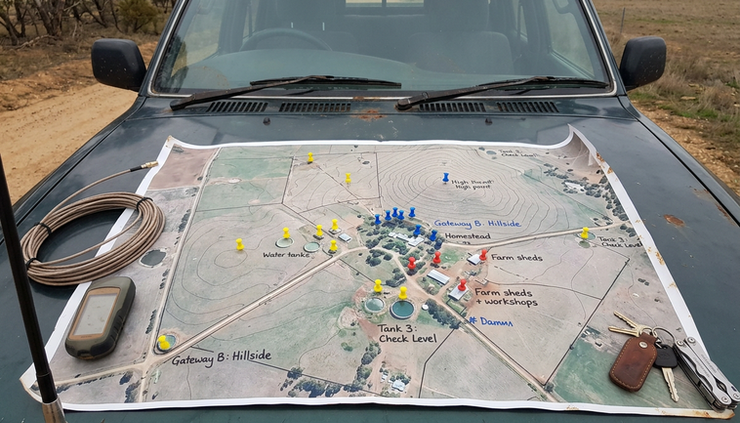
A desktop map is a starting point, not the full site plan. Satellite imagery can show sheds, tracks, tree lines and dams, but it cannot show every wall type, antenna obstruction or maintenance constraint.
A practical site map should mark:
Sensor locations
Possible gateway positions
Power sources
Internet or network backhaul options
Tall structures such as silos, towers and shed roofs
Dense vegetation and shelter belts
Hills, gullies and cuttings
Vehicle access and locked areas
Areas exposed to flooding, dust, vibration or machinery impact
For a farm, the map might include paddock boundaries, troughs, pumps and sheds. For an industrial property, it may include yards, storage zones, heavy vehicle routes, workshops and processing buildings.
The aim is to see radio paths before hardware goes in. LoRaWAN performs well over long distances when the path is reasonable, but every site has limits. Metal cladding, concrete, earth banks, dense trees and machinery can reduce performance. A gateway behind a shed wall may cover one side of a property well and leave the other side weak.
Height gives radio signals breathing room. A gateway placed higher on a mast, silo, tank stand or suitable roof line often has a better view of the site. That said, the best high point still needs power, backhaul, weather protection and safe access.
Select gateway positions with more than distance in mind
Gateway placement is one of the most important choices in a LoRaWAN project. Distance matters, but it is only one part of the decision.
A good gateway position balances several needs:
Clear radio coverage to the main sensor clusters
Safe and legal mounting
Reliable power
Suitable backhaul to the internet or private system
Protection from weather, heat, dust and pests
Practical access for installation and servicing
Room for antenna mounting and cable routing
On farms, good candidates may include a main shed, elevated tank, communications pole or central high point. On industrial sites, candidates may include a workshop roof, process building, security mast or service corridor.
The central point is not always the best point. A gateway at the centre of a property can still perform poorly if it sits low or behind metal walls. A gateway nearer one edge may work better if it has height and a cleaner radio path.
For larger properties, more than one gateway may make sense. This can improve coverage, provide overlap across key areas and allow expansion without reworking the whole design. Gateway overlap also helps where some sensors sit in difficult positions, such as inside buildings or behind earthworks.
A Dragino LoRaWAN Network for Farms and Industrial Sites should be planned as a coverage system, not a collection of individual devices. The gateway, antenna, enclosure, backhaul and sensor positions all work together.
Antenna placement can make or break the result
The antenna is the part of the system that most directly affects the radio path. Small placement changes can produce large differences.
Good antenna planning looks at:
Height above nearby obstructions
Separation from metal surfaces
Cable length and cable quality
Weather sealing at connectors
Physical protection from birds, branches and machinery
Earthing and lightning protection where required
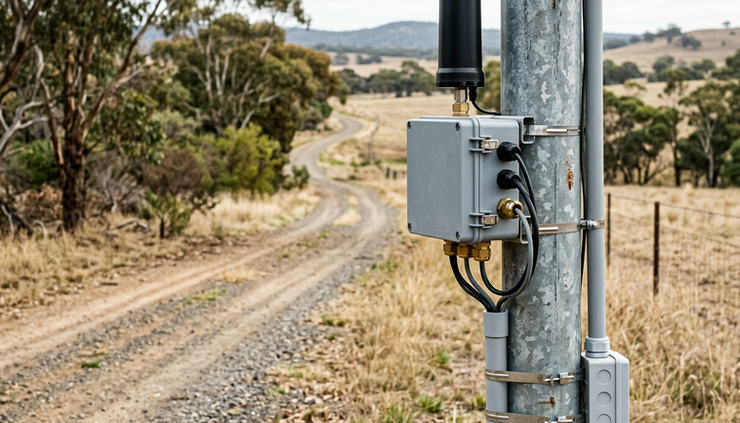
Antenna cables introduce loss, so the gateway and antenna layout should avoid long cable runs where possible. In many cases, placing the gateway enclosure close to the antenna and running power or data to that point works better than running a long antenna cable back to a convenient indoor location.
For outdoor sites, installation quality matters. Water ingress, loose connectors and UV-damaged cable ties are not radio design problems, but they can become network problems later.
Test radio paths before a larger rollout
A small test can save a large amount of rework. Before installing many sensors, ProSense Solutions can help assess likely coverage and test radio paths from proposed monitoring points.
Testing may include temporary gateway placement, sample Dragino sensor devices and readings taken from representative locations. The goal is not only to see whether a message gets through once. The goal is to understand whether the link has enough margin for weather, vegetation growth, seasonal changes and normal site activity.
A good field test checks:
Remote corners of the property
Sensor points behind sheds, tanks or machinery
Indoor locations with metal or concrete walls
Low points such as gullies or sumps
Areas where trees may hold water after rain
Points close to high electrical noise or moving equipment
When a test result looks weak, there are usually several options. The team can raise the antenna, adjust the gateway location, add another gateway, move the sensor antenna, or change the mounting position. It is better to make those calls early than after dozens of devices have been installed.
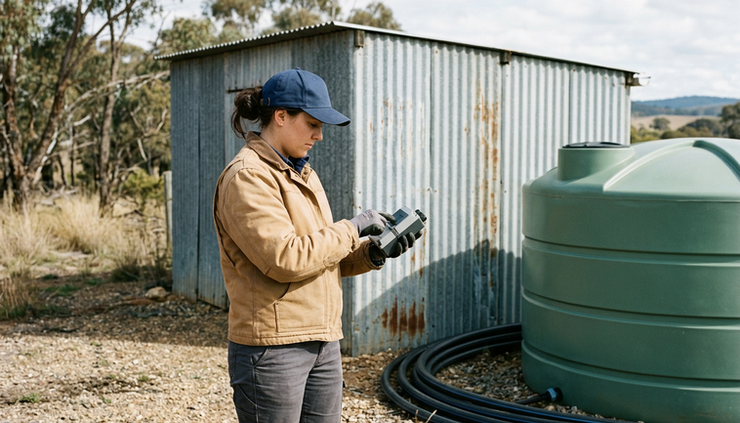
Plan gateway backhaul from the start
Every LoRaWAN gateway needs a way to send data onwards. That backhaul path may use wired internet, Wi-Fi, cellular or another suitable connection, depending on the site.
Backhaul is easy to overlook because LoRaWAN focuses attention on long-range sensor coverage. A gateway with strong sensor reception still needs a dependable upstream connection. Remote farms, mine support yards, quarries and large industrial blocks can all have patchy internet options.
Backhaul planning should ask:
Is there fixed internet near the gateway position?
If cellular is used, is reception strong at the gateway height?
Can the SIM plan support the data and management needs?
Will the gateway need an external cellular antenna?
What happens during a power outage?
Who receives alerts if the gateway goes offline?
Power deserves the same attention. A shed with mains power may be simple. A remote gateway may need solar power and battery storage. That changes enclosure size, mounting position, maintenance checks and budget.
Reliable backhaul also supports remote updates, diagnostics and troubleshooting. That can reduce site visits and make the network easier to manage as more sensors are added.
Match the design to reporting requirements
LoRaWAN suits low-power, low-data monitoring. It is not built for high-bandwidth video or constant real-time control. The network design should match the actual reporting need.
For many farms and industrial sites, useful data arrives in small packets. A level reading, temperature value, status change or alarm can do a lot when it arrives at the right time and reaches the right system.
The design should define:
Normal reporting intervals
Alert thresholds
Battery life expectations
Data destination and dashboard needs
Notification paths for faults or alarms
Device naming and asset structure
Maintenance responsibilities
For example, a tank level sensor might report a few times per day and send extra alerts near a low-level threshold. A door sensor may only report when the state changes. A weather station may send more regular readings. Each pattern affects battery life and message traffic.
Clear reporting rules also help avoid alert fatigue. If every minor variation creates a notification, people stop trusting the system. Good planning sends the right information to the right person at the right time.
Build for expansion without wasting money
Most sites do not monitor everything on day one. They start with a few high-value points, then add more once the system proves useful.
That staged approach works well with LoRaWAN, provided the first design leaves room to grow. Expansion does not mean guessing every future device. It means making sensible choices that avoid boxed-in options later.
A growth-ready plan may include:
Gateway positions that support future sensor clusters
Naming conventions that make assets easy to find
Enclosures with room for service and cable management
Backhaul that can support remote administration
Clear records of device locations and mounting details
A spare coverage margin in difficult parts of the site
Documentation matters here. A simple record of where each device sits, how it is mounted, when it was installed and what it connects to can save hours later. On large properties, device records also help seasonal staff, contractors and maintenance teams work safely around equipment.
Expansion should still follow evidence. If new monitoring points sit outside the original coverage area, test before installing. A network that worked well for shed-based monitoring may need a gateway change before it covers remote troughs or distant boundary infrastructure.
Keep maintenance access practical
A network plan should consider the person who has to service it. If a gateway needs a boom lift, a locked yard shutdown or a long drive through wet ground for every inspection, the maintenance burden rises.
Good maintenance planning looks for safe access, clear labelling and sensible mounting height. Devices should stay protected from impact and tampering, but not become impossible to reach.
On farms, this can mean avoiding locations where livestock rub against poles or machinery passes close to enclosures. On industrial sites, it can mean keeping devices away from heat, washdown zones, forklifts and vibration where possible.
Maintenance planning should cover:
Battery replacement schedules
Gateway inspection intervals
Firmware and configuration management
SIM and backhaul checks
Antenna and cable inspections
Records for moved, replaced or retired devices
A reliable network is not only a well-designed network. It is one that can be kept in good condition without excessive effort.
What a good LoRaWAN plan delivers
A strong plan gives the deployment team clear answers before the main rollout begins. It shows where devices will go, where gateways should sit, how data will leave the site and what needs testing.
For farms and industrial properties, that planning reduces guesswork. It also helps match the network to the value of the data. A critical pump alarm deserves stronger design attention than a non-urgent reading from a low-risk area.
ProSense Solutions helps customers plan Dragino LoRaWAN networks around real site conditions. That includes asset mapping, gateway selection, radio path testing, antenna planning, backhaul review and room for future monitoring points.
The best result is a network that fits the property as it is today and can grow as the monitoring need grows. Start with the map, test the hard spots, mount equipment where it can do its job, and keep the design simple enough to maintain.


