.png)
Wireless Temperature and Humidity Data Logger with Bluetooth and PDF Reports
Environmental data is only useful when it is accurate, easy to collect, and simple to prove. If a cold room drifts out of range overnight, a shipment warms in transit, or a lab storage area becomes too humid, the record needs to show what happened without hours of manual handling.
A wireless temperature and humidity data logger solves that problem by recording key environmental conditions, then letting you access the data from a phone. With BLE 4.0 connectivity, high-accuracy sensors, the free Nice Logger App, and automatic PDF reporting, this compact logger is built for people who need reliable readings without extra admin.
It is designed for cold chain monitoring, laboratory storage, HVAC checks, food handling, field work, building inspections, and other applications where temperature, humidity, and pressure matter.

A faster way to collect environmental records
Traditional data loggers often work well once they are set up, but retrieving the data can slow everything down. The device may need to be removed from service, connected to a computer, or handed to another person before records can be reviewed.
This logger uses BLE 4.0 wireless connectivity, so programming and download tasks can be handled directly from a mobile phone using the Nice Logger App. That means fewer cable connections, less time spent moving devices around, and faster access to the information that matters.
For sites that check multiple storage areas, vehicles, rooms, or cabinets, this can save a lot of time. Instead of opening each logger, connecting it, downloading files, and naming reports one by one, staff can collect readings wirelessly and generate the records needed for review.
The value is not only convenience. Faster collection also reduces the risk of missed records. When the process is simple, teams are more likely to check data on schedule.
Built for temperature, humidity, and pressure monitoring
Many environmental checks start with temperature, but temperature alone rarely tells the full story. Humidity can affect packaging, equipment, samples, materials, timber, paper, electronics, medicines, and food products. Barometric pressure can also help with environmental assessment, HVAC diagnostics, and field records.
This logger combines three sensing functions in one portable unit.
The NTC temperature sensor supports accurate readings
The logger uses a high-accuracy NTC temperature sensor. NTC sensors are widely used for temperature measurement because their resistance changes predictably as temperature changes. In practice, that makes them well suited to continuous temperature logging across storage and transport settings.
For cold chain logistics, that can mean tracking whether goods stayed within the required range. For laboratories, it can support records for fridges, freezers, incubators, controlled rooms, and sample storage areas. For facilities teams, it gives a record of how an area behaves across a full day, not just at the moment someone takes a spot reading.
The capacitive humidity sensor reacts quickly
Humidity can change quickly when doors open, equipment cycles, or weather conditions shift. A fast-response capacitive humidity sensor helps capture those changes rather than smoothing them away.
That matters for applications where short excursions can be meaningful. A storeroom may sit within range most of the time, then spike after a door is left open. A transport container may remain cool but become too humid during loading. A monitored room may pass a manual check at 9 am, then drift during the afternoon.
Continuous logging gives a clearer picture than occasional readings.
The barometric pressure sensor adds another layer
The logger also includes a precision barometric pressure sensor. This is useful when pressure changes are part of the monitoring picture, such as HVAC performance checks, environmental studies, and site condition records.
Pressure readings can help explain patterns in temperature and humidity data. For example, changing weather systems can influence indoor humidity. HVAC behaviour can also affect room pressure relationships, depending on the system and building design.
The Nice Logger App keeps records within reach
The free Nice Logger App for iOS and Android is central to the workflow. It allows the logger to be programmed, monitored, downloaded, and reported without needing a dedicated computer at every check point.
The app supports:
Real-time monitoring from a compatible phone
Historical data review
Wireless setup and downloads
One-click PDF report generation
Charts, summaries, and analysis
Data sharing for review or audit records
This is useful in day-to-day work because the person checking conditions can review the data straight away. If something looks outside the expected range, the issue can be flagged sooner.
For example, a cold room check may show that temperatures rose for 20 minutes during loading. A lab fridge report may show stable conditions across the weekend. An HVAC check may show recurring humidity peaks at the same time each day. These patterns are much easier to understand when the data is available in charts instead of raw figures alone.
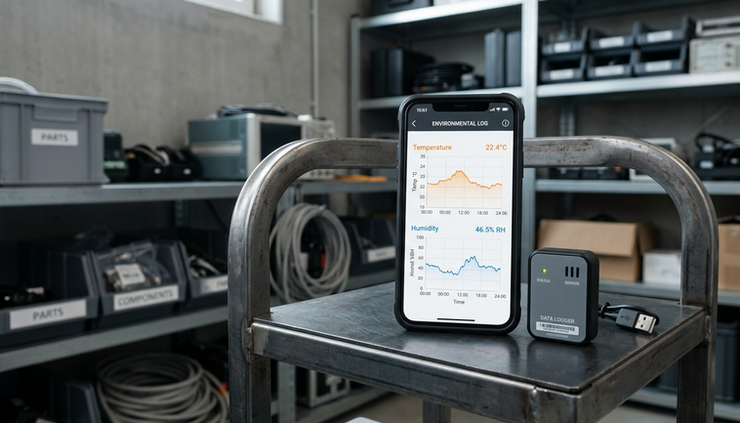
PDF reports make audits and handovers easier
A good data logger should not only record readings. It should also help make those readings usable.
The automatic PDF reporting feature is one of this device’s most practical strengths. With one click in the app, the logger can generate a professional report that includes summaries, charts, and analysis. This gives teams a clear file that can be saved, shared, attached to a job record, or provided during an internal review.
A PDF report is useful because it is easy to read and easy to store. It also helps reduce errors that can happen when staff copy readings manually into spreadsheets or handwritten forms.
For compliance-heavy environments, clear records matter. The report can support routine checks, cold chain handovers, storage reviews, and maintenance history. It can also help identify repeat problems, such as a fridge that warms during defrost cycles or a room that becomes too humid after hours.
The logger also supports Max/Min recording, which helps highlight the highest and lowest values captured during the monitoring period. For audits and excursion checks, those values are often the first numbers people want to see.
Wireless downloads can save time on busy sites
In a small setup with one logger, plugging in a device may not seem difficult. The problem grows when there are several monitoring points.
A food distributor may monitor cool rooms, loading areas, delivery vehicles, and dispatch zones. A lab may monitor fridges, freezers, storage cabinets, and sample preparation areas. A facilities team may rotate loggers through plant rooms, ducts, occupied spaces, and problem areas.
With BLE 4.0, data can be retrieved in seconds when within wireless range. That makes it easier to keep monitoring devices in place and reduces unnecessary handling.
There are other practical benefits too:
Less wear on ports and cables
Fewer missing cable issues
Faster checks during a site walk
Easier downloads from hard-to-reach locations
Less disruption to monitored spaces
For sensitive areas, reducing contact can be useful. In a storage room, every door opening can affect conditions. In a clean or controlled environment, less handling can also support better process discipline.
Dual-colour LEDs give quick status checks
Not every check needs a full report. Sometimes the person walking past a logger simply needs to know whether it is recording, in alarm, or ready for attention.
The logger’s dual-colour LED indicators provide a quick visual status. This helps during routine inspections, especially when several devices are deployed across a site.
LED indicators are useful because they reduce guesswork. A quick glance can show whether the logger is active or if an alarm condition needs closer review in the app. That does not replace proper record checks, but it supports faster day-to-day supervision.
For busy teams, clear status signals help prevent small issues from becoming larger ones. If a logger has stopped recording or has detected an alarm condition, staff can respond before the next formal report cycle.
Where this logger fits best
This compact logger is suited to any setting where environmental conditions need to be checked, recorded, and reported. Its strength is the mix of portability, wireless access, and simple reporting.
Cold chain logistics
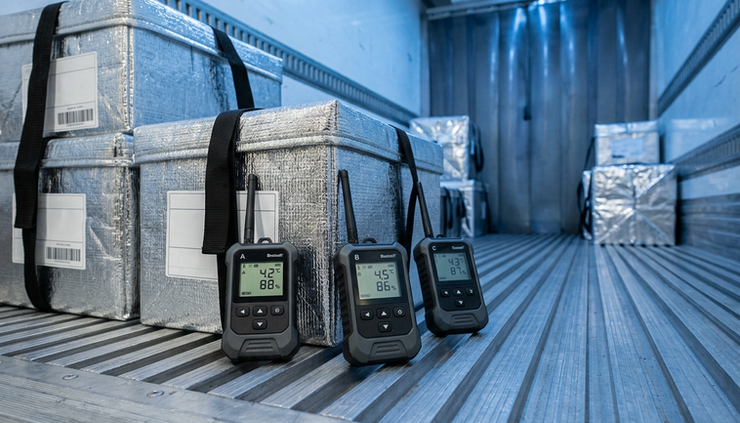
Temperature excursions during storage or transport can affect product quality. A portable logger can travel with goods, sit inside a cool room, or monitor loading areas. Wireless data collection helps staff check records without unpacking or disturbing the logger more than needed.
PDF reports can support handovers between sites, internal quality checks, and delivery documentation.
Laboratory and sample storage
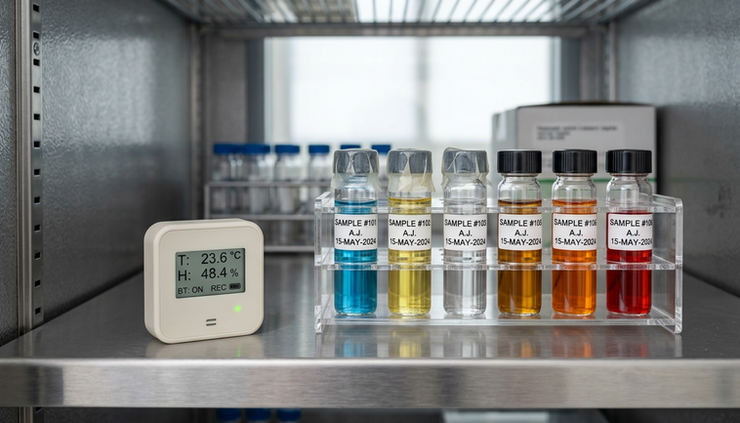
Labs often need clear environmental records for fridges, freezers, incubators, sample rooms, and reagent storage. The Max/Min feature helps identify excursions, while historical review shows whether conditions are stable over time.
The compact size makes the logger useful in crowded storage areas where space is limited.
HVAC and building checks
HVAC problems are often intermittent. A room may feel comfortable during inspection but drift out of range later in the day. Logging temperature, humidity, and pressure gives a better record of what happens across hours or days.
Facilities teams can use the reports to compare areas, check system behaviour, or confirm whether adjustments improved conditions.
Food storage and handling
For food storage settings, temperature and humidity records can help show that goods were held under suitable conditions. Wireless collection and PDF reports make routine checks easier to manage across cool rooms, dry stores, and transport containers.
Field and site monitoring
Because the logger is compact and portable, it can be used for field checks, temporary monitoring, and site investigations. It is a practical choice when conditions need to be recorded away from fixed equipment.
What sets it apart from basic loggers
Basic loggers can record temperature or humidity, but the daily workflow often decides whether a device is easy to live with. This model combines the core features that matter for regular monitoring.
Feature | Practical benefit |
BLE 4.0 wireless connection | Program and download data from a phone |
NTC temperature sensor | Accurate temperature tracking for storage and transport |
Capacitive humidity sensor | Fast response to humidity changes |
Barometric pressure sensor | Extra environmental context for site checks |
Nice Logger App | Monitoring, review, download, and reporting in one place |
Automatic PDF reports | Clear files for audits, handovers, and records |
Max/Min recording | Quick view of high and low excursions |
Dual-colour LEDs | Fast status checks without opening the app |
Compact body | Easy to place in rooms, vehicles, cabinets, and containers |
The key point is that the logger supports the full monitoring cycle. It records conditions, helps staff retrieve data quickly, and produces reports that can be shared without extra formatting.
A practical workflow from setup to report
A typical workflow is simple.
Place the logger
Position it where conditions need to be monitored, such as a cold room shelf, transport container, lab fridge, storage cabinet, or HVAC test location.
Program the device from the app
Use the Nice Logger App on iOS or Android to configure the recording settings. Wireless setup means the device does not need to be connected to a computer.
Let it record
The logger tracks temperature, humidity, and barometric pressure over the monitoring period.
Check status with the LEDs
Use the dual-colour indicators for a quick recording or alarm status check.
Download the data wirelessly
Retrieve the recordings through BLE 4.0 from a compatible phone.
Generate the PDF report
Create a report with summaries, charts, and analysis, then save or share it as needed.
This workflow is especially helpful in places where monitoring is repeated often. Each step is simple enough for routine use, but the final report is clear enough for review.
Small device, clear records, less manual work
The best monitoring tools make accurate recordkeeping easier, not harder. This Temperature & Humidity Data Logger brings together wireless BLE 4.0 connectivity, high-accuracy sensing, phone-based setup, fast downloads, and automatic PDF reports in a compact unit.
For cold chain logistics, laboratories, HVAC work, food storage, and field monitoring, it offers a practical way to capture environmental conditions and turn them into records that are easy to read and share.
The result is simple: less time spent collecting data manually, more confidence in the records, and faster access to the information needed to act.


