.png)
Connect Existing Modbus Equipment to Modern Monitoring Without Replacing Systems
A working Modbus network still has value. If the meters, sensors, PLCs or controllers are already collecting useful data, replacing the whole system is often the most expensive way to solve a monitoring problem.
Many industrial and utility sites have reliable RS485 Modbus equipment in place, but the data stays locked inside local panels, handheld checks, ageing SCADA screens or isolated controllers. The issue is not the field device. The issue is access.
ProSense can connect existing RS485 Modbus equipment to cellular, Ethernet or LoRaWAN gateways, then bring that data into a central monitoring platform. That approach can reduce upgrade costs, preserve good assets and add dashboards, alarms and remote reporting without forcing a full system replacement.
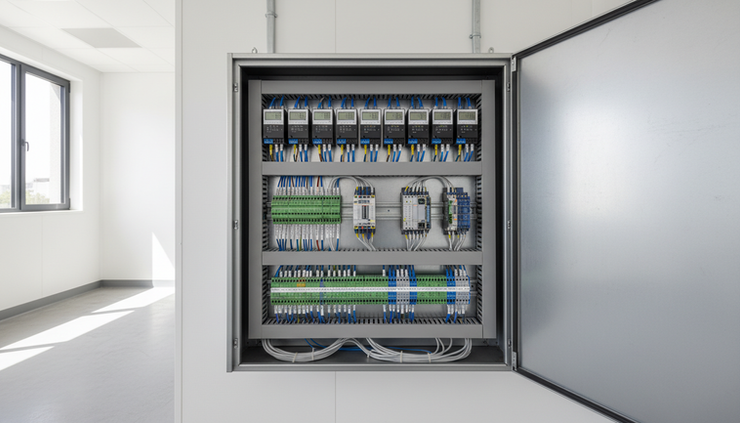
Existing Modbus equipment often has years of useful life left
Modbus has stayed common because it is simple, open and widely supported. Many power meters, water meters, temperature controllers, pressure sensors, variable speed drives, PLCs and RTUs can share readings over Modbus RTU on RS485.
That does not mean every legacy installation is perfect. Some records may be incomplete. Device addresses may not be labelled. Registers may be undocumented. Cable runs may have grown over time as plant expanded.
Even so, a working Modbus network is usually worth assessing before replacing.
Common field assets that can often be connected include:
Energy meters and power quality meters
Water, gas and flow meters
Tank level and pressure sensors
Temperature and humidity controllers
Pump, compressor and HVAC controllers
PLCs and remote I/O modules
Existing RTUs in pump stations or treatment plants
Generator and battery system controllers
VSDs and motor protection relays
The key question is simple: is the device already measuring something useful, and can it share that value over Modbus?
If the answer is yes, a gateway can often collect that data and pass it into a newer monitoring layer.
This is especially useful across distributed sites. A manufacturer may have meters in several switchboards. A council may have pump stations spread across a large area. A farm, mine, utility or water operator may have tanks and controllers that work well locally, but no easy way to view them from one place.
Replacing every field device in those environments can be costly, slow and disruptive. Connecting what already exists is usually a more practical first step.
How the connection works
A modern monitoring setup does not need to take control away from existing equipment. In many cases, it reads data from the Modbus network and sends that data onwards.
A typical arrangement looks like this:
Existing RS485 Modbus devices remain connected in the field.
A gateway connects to the RS485 network.
The gateway polls selected Modbus registers.
The gateway sends the values via cellular, Ethernet or LoRaWAN.
A central platform stores, displays and reports the data.
Dashboards, alarms and reports become available remotely.
The gateway acts as a bridge between the field network and the monitoring platform. It does not need to replace the meter, sensor, PLC or controller.
That matters because many existing systems already perform local control well. A PLC may start and stop pumps. A temperature controller may manage a process loop. A power meter may record demand and consumption accurately.
The monitoring system can sit beside that control layer and focus on visibility.
Good integration starts with the register map. Each Modbus value lives at a register or coil address. For example, one meter may store voltage, current and energy values in holding registers. A controller may expose pump run status, fault status and tank level in its own register map.
Once the right registers are identified, the gateway can collect the required values at suitable intervals.
Fast-changing control values may need frequent polling. Slower environmental readings may only need updates every few minutes. Remote assets using LoRaWAN may need a more selective approach because payload size and transmission frequency matter.
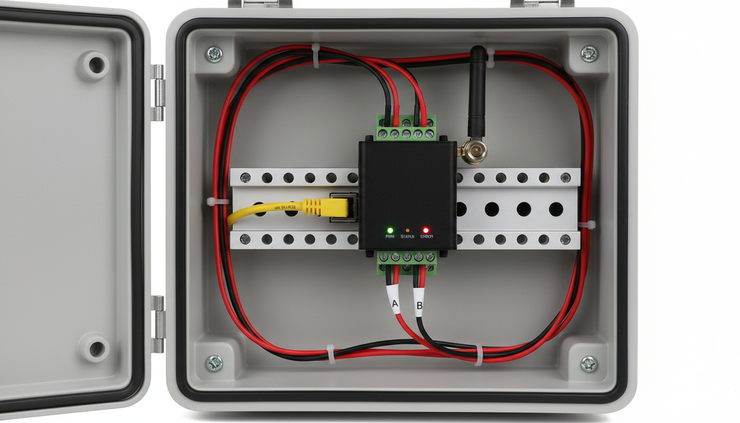
Choosing between cellular, Ethernet and LoRaWAN
The right gateway path depends on the site, the network available and the type of data being collected. There is no single best option for every installation.
Connection type | Where it fits well | What to check before using it |
Cellular | Remote sites, temporary locations, assets without site network access | Mobile coverage, antenna location, SIM management and data plan requirements |
Ethernet | Factories, plants, switchrooms and sites with reliable LAN access | Network permissions, firewall rules, IP addressing and separation from control networks |
LoRaWAN | Low-power remote sensors, wide-area sites and long-distance monitoring | Gateway coverage, message size, update rate and battery life if end devices are battery powered |
Cellular is often the most direct path for remote assets. A pump station, bore, tank or generator may have no fixed network nearby, but it may have usable mobile coverage with the right antenna.
Ethernet can work well inside industrial sites where a network is already available. It can also suit systems that need frequent polling or higher volumes of data.
LoRaWAN is useful when low-power, long-range communication is the priority. It is not a like-for-like replacement for every Modbus application, but it can be a smart fit for selected readings across large areas.
A practical design may use more than one path. For example, a factory may use Ethernet for plant meters, while remote storage tanks use cellular gateways. A regional utility may use LoRaWAN for low-frequency level readings and cellular for high-priority control sites.
The connection method should support the data need, not the other way around.
What the central monitoring platform adds
Connecting Modbus equipment to a gateway solves the access problem. The monitoring platform then turns the data into something people can use.
A central platform can provide:
Live and historical dashboards
Alarm notifications for faults or limits
Trend charts for performance review
Scheduled reports for operations or compliance
Remote access across multiple sites
Data export for other systems
Device health and communication status
This can make a major difference to day-to-day operations.
A site team may already have the data locally, but if someone has to drive to a switchboard, open a panel and read a screen, the data is not helping fast enough. Remote visibility changes that.
For example, a water operator may want to know when a tank level drops below a set point. A facilities team may want daily energy use across several buildings. A maintenance team may want compressor fault alarms before production is affected. A farm manager may want pump run hours and bore levels without visiting each site.
Dashboards help people see what is happening now. Alarms help them respond when something changes. Reports help them find patterns over time.
The goal is not just to collect more data. The goal is to make existing data easier to act on.
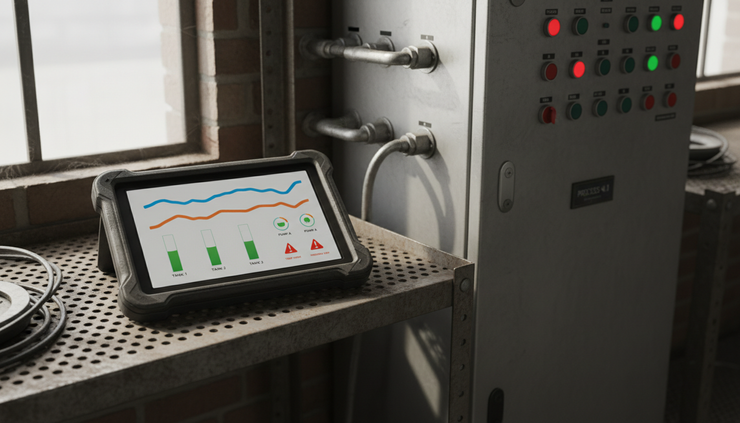
Why integration can cost less than replacement
A full replacement project can include new meters, new sensors, rewiring, panel changes, commissioning, documentation, downtime and training. That may be needed in some cases, especially where hardware is unsafe, unsupported or no longer accurate.
But if the installed equipment is sound, replacement can create extra cost without solving the main issue any better than integration would.
Connecting existing Modbus assets can reduce costs in several ways.
It protects hardware that still works
Meters and controllers are often selected, installed and commissioned for a reason. If they still measure accurately and communicate reliably, keeping them can avoid unnecessary spending.
It reduces disruption
Replacing field devices can mean shutting down equipment, opening panels, changing wiring and re-testing control logic. Reading data through a gateway can often be done with less interruption, especially when planned carefully.
It supports staged upgrades
A site does not need to modernise every panel at once. High-value or high-risk assets can be connected first. Other areas can follow later as budgets and priorities allow.
It improves visibility before major works
Before replacing hardware, it can be useful to collect real operating data. Trends may show which assets need attention and which are performing well. That can help plan future upgrades with better evidence.
It can keep SCADA and local control in place
A gateway-based monitoring layer can often sit beside existing SCADA or PLC systems. The local system remains responsible for control, while the monitoring platform provides remote reporting and alarms.
That separation is useful where control systems must remain stable. It also helps teams add visibility without redesigning the whole automation architecture.
The checks that make a Modbus integration work
Not every Modbus connection is plug-and-play. Good results depend on careful checks before installation.
Start with the basics.
Device list
Identify every meter, sensor, PLC or controller on the RS485 network. Record make, model, Modbus address and physical location where possible.
Register mapping
Confirm which registers hold the values needed. Check data type, scaling, byte order and units. A number on its own is not enough if no one knows whether it means kilowatts, litres, degrees or status code.
Network condition
Inspect wiring, termination, shielding and device addresses. RS485 networks can be reliable, but poor wiring and duplicate addresses can cause intermittent faults.
Poll rate
Set sensible polling intervals. Over-polling can overload older devices or create messy traffic. Under-polling may not catch important changes.
Data naming
Use clear point names in the platform. A label like `Pump_Station_3_Tank_Level_Percent` is far more useful than `Register_40123`.
Alarm logic
Avoid alarm noise. Set thresholds, delays and reset rules so alerts reflect real conditions, not short spikes or normal process changes.
Cyber security
Keep control networks protected. Use suitable network separation, secure credentials and documented access rules. Gateways should be configured with care, especially where they connect to public or wide-area networks.
These checks are not paperwork for its own sake. They prevent common problems and make the system easier to support later.
A practical example
Consider a regional site with several pump stations. Each station already has a controller, a flow meter and a tank level device connected over RS485 Modbus. Operators can see values locally, but they rely on site visits or phone calls when something goes wrong.
A replacement project might swap controllers, install new instruments and build a new control system. That could be valid if the existing equipment is failing.
But if the equipment is healthy, a lower-impact approach may be better.
A ProSense integration could connect each RS485 network to a cellular gateway. The gateway would read tank level, pump run status, fault status, flow rate and key alarms. Those values would appear in a central monitoring platform with site-by-site dashboards.
Operators could then:
View tank levels remotely
Receive alarms when a pump trips
Compare flow trends between sites
Review pump run hours for maintenance planning
Generate reports without manual readings
The local controllers would still manage the pumps. The new layer would improve visibility, alarms and reporting.
That is the main advantage of this approach: it adds modern monitoring where it helps, without forcing a full rebuild where one is not needed.
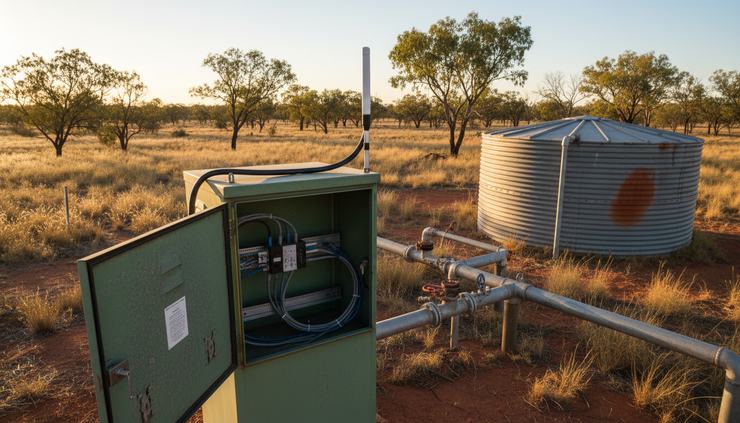
When replacement still makes sense
Integration is not always the right answer. Some systems should be replaced or upgraded before remote monitoring is added.
Replacement may be the better path when:
Devices no longer measure accurately
Hardware has no usable communication interface
Wiring is damaged or unsafe
Documentation is missing and cannot be rebuilt with confidence
The control system is unreliable
The site needs new functions that existing devices cannot support
Security risks cannot be managed with the current architecture
A good assessment should be honest about these limits. The best outcome may be a mix of both approaches: keep the assets that are fit for service, replace the weak points and connect the system to a central platform.
That balanced approach avoids waste while still improving reliability.
The best upgrade may be a connection, not a replacement
Modern monitoring does not always require a blank slate. Many Modbus meters, sensors, PLCs and controllers can keep doing their job while gateways and a central platform make their data easier to see, alarm and report on.
For sites with existing RS485 Modbus equipment, this can be a practical path from local visibility to remote monitoring. It can lower upgrade costs, reduce disruption and protect assets that still have value.
The first step is to check what is already installed, what data it can share and which communication path best suits the site. From there, ProSense can help connect existing equipment through cellular, Ethernet or LoRaWAN gateways and bring the data into one place.
A full replacement may still be right for some systems. But for many sites, the smarter move is to connect what already works and build better monitoring around it.


