.png)
How Remote HVAC Monitoring Cuts Costs for Property Managers
A failed air conditioning unit during a heatwave does more than make a tenancy uncomfortable. It can trigger urgent callout fees, tenant complaints, after-hours coordination, and pressure to replace equipment before the budget is ready.
That is why remote HVAC monitoring matters. For property and facility managers dealing with ageing plant, seasonal peaks, and multiple sites, waiting for a fault to become obvious is an expensive way to manage comfort.
Remote monitoring changes the job from reactive to planned. Sensors and meters track conditions around the clock, then send alerts when readings move outside set limits. Instead of discovering a problem through a complaint, the maintenance team can see early warning signs and act before a minor issue becomes a major repair.
For commercial property portfolios, the return can be significant. Savings often come from fewer emergency repairs, better timing of maintenance, lower energy waste, and fewer tenant disruptions.

Why HVAC faults become expensive so quickly
HVAC systems are among the hardest-working assets in a commercial building. They run for long hours, respond to changing weather, and affect nearly every occupant. When they go wrong, the impact is immediate.
The cost is rarely limited to the part that failed. A single breakdown can involve:
Emergency technician callout fees
Temporary cooling or heating measures
Lost maintenance time across the wider site
Tenant complaints and lease pressure
Premature replacement decisions
Higher energy use while equipment struggles
The timing often makes the problem worse. Air conditioning tends to fail during the hottest weeks of summer, when equipment is under load and service providers are busiest. Furnaces and boilers often show faults when cold weather arrives and occupants expect reliable heating.
For a large property development and management company, this pattern became a recurring operational problem. The company managed office building complexes with ageing HVAC systems. Multiple repairs and system replacements pushed operating costs higher, and the team needed a better way to manage heating and cooling across its properties.
Two issues kept coming up:
Cooling units failed or malfunctioned during peak summer demand
Heating systems needed urgent maintenance or went down during colder months
The company did not just want faster repairs. It wanted to predict maintenance needs and prevent failures where possible.
What remote HVAC monitoring actually tracks
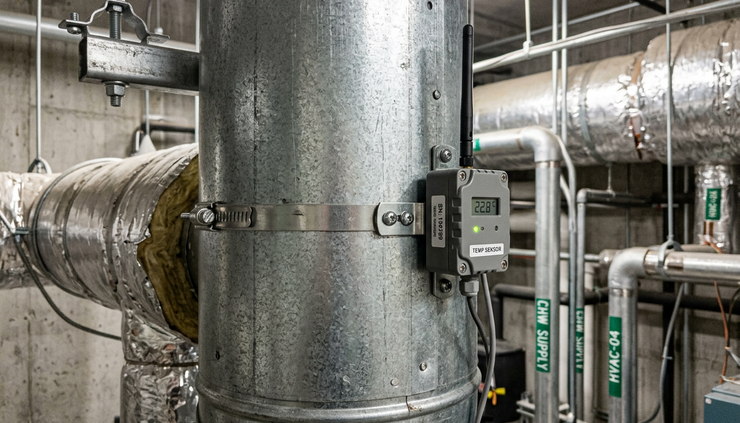
Remote HVAC monitoring uses sensors, meters, and a connected dashboard to keep watch over equipment and environmental conditions. The goal is not to replace qualified HVAC technicians. It is to give property teams earlier, clearer information so they know when to act.
A system such as the Monnit HVAC Remote Monitoring Solution can help facility maintenance managers track site conditions 24/7 through an online dashboard on a smartphone or computer. Alerts can be sent by email, text, or call, depending on how urgent the issue is and who needs to respond.
Common monitoring points include:
What is monitored | Why it matters |
Temperature | Shows whether areas are staying within comfort or equipment limits |
Humidity | Helps identify comfort issues, condensation risk, and poor air balance |
Water presence | Warns of leaks near plant rooms, drip trays, or equipment |
Power status | Helps detect outages, trips, or equipment that has stopped running |
Current draw | Can show abnormal equipment behaviour or excessive load |
Door or access activity | Helps confirm plant room access and maintenance visits |
Runtime | Supports service planning and asset performance checks |
The specific setup depends on the building and its systems. A small commercial property may need simple temperature, leak, and power alerts. A larger facility may monitor multiple air handling units, rooftop units, boilers, chillers, pumps, and electrical loads.
The important point is that monitoring brings hidden conditions into view.
Without sensors, a property manager may only hear about HVAC performance when a tenant complains. With sensors, the team can see a temperature drift, a power interruption, or a leak warning early enough to respond.
How alerts reduce repair and replacement costs
The biggest savings often come from catching problems while they are still small.
A clogged filter, failing fan, stuck damper, blocked drain, short cycling unit, or abnormal temperature pattern may not cause an immediate shutdown. Left alone, these issues can force equipment to work harder. That extra strain can shorten component life and increase power use.
Remote alerts give maintenance teams a chance to intervene earlier. For example:
A temperature alert can show that a zone is warming faster than expected
A water sensor can detect a drain pan overflow before water damages finishes
A power meter can show that a unit has stopped drawing current
A current sensor can flag equipment working outside normal patterns
A runtime reading can show whether a unit is operating longer than usual
These alerts help the team choose the right response. Not every alert needs an emergency callout. Some can be scheduled into the next maintenance visit. Others need immediate action to protect tenants or equipment.
That difference matters. Planned work is usually easier to price, schedule, and document. Emergency work is often rushed and expensive.
For the property company in the brief, remote monitoring offered a practical way to support preventive processes. Instead of repeatedly reacting to breakdowns across its portfolio, the team could spot issues in the dashboard and fix them before they became larger failures.
That is the core cost benefit of remote HVAC monitoring. It helps teams spend more time preventing expensive problems and less time cleaning up after them.
Why tenant complaints fall when teams see issues first
Comfort complaints are costly even when the equipment is not broken. They take time to log, assign, inspect, and resolve. They can also damage trust between tenants and building management.
Most tenants do not care why a space is too hot or too cold. They care that the issue affects their staff, customers, or operations. If they have to report the same comfort problem more than once, the property team starts from a weaker position.
Remote monitoring helps reduce that friction.
When facility managers can see temperature and humidity trends, they can identify unusual conditions before occupants escalate the issue. If a tenancy starts warming above the expected range, the team can check the relevant unit, damper, controller, or schedule before the complaint arrives.
This also improves communication. Instead of saying, “We will look into it,” the team can speak with more confidence:
The affected area is already being monitored
The issue started at a known time
A technician has been assigned
Temporary measures can be put in place if needed
The result can be checked after the repair
That kind of response can change how tenants experience a fault. The issue may still be inconvenient, but it feels managed rather than ignored.
Energy savings come from finding waste
HVAC energy waste often hides in plain sight. A building may still feel comfortable while equipment runs longer than needed, fights against other systems, or maintains set points when an area is empty.
Remote data helps expose these patterns. It can show plant running outside expected hours, repeated heating or cooling cycles, or spaces that never reach target conditions. Once the team can see the pattern, it can investigate the cause.
Common sources of waste include:
Equipment left running after hours
Poor thermostat placement
Simultaneous heating and cooling
Dirty filters causing longer runtimes
Leaking valves or stuck dampers
Controls that no longer match building use
Plant schedules that were never updated after tenancy changes
None of these issues needs to be dramatic to be costly. Small inefficiencies across multiple sites can add up over a year.
A dashboard makes this easier to manage across a portfolio. Rather than relying on manual checks at each property, managers can compare readings, review alerts, and focus attention where the data shows a problem.

What makes Monnit useful for commercial properties
Monnit is well suited to commercial property and facility monitoring because it uses a wide range of fast-install wireless sensors and meters. That matters for existing buildings, where complex cabling can be costly or disruptive.
A typical Monnit setup can support:
HVAC equipment monitoring
Temperature and humidity tracking
Water leak detection
Power and current monitoring
Door and access monitoring
Equipment runtime checks
Alerts by email, text, or call
Dashboard access from a phone or computer
For property managers, the value is not only in the sensors. It is in how the information reaches the right person at the right time.
A plant room issue at 2 am does not help anyone if the reading sits unnoticed until morning. An alert can go to the maintenance manager, an on-call technician, or another nominated contact. Escalation can be matched to the seriousness of the reading.
This gives teams a practical way to manage multiple sites without being physically present at each one. They still need skilled technicians, service contractors, and sound maintenance planning. Monnit supports those people with better visibility.
How to build an ROI case for remote monitoring
The return on investment for HVAC monitoring usually comes from several cost areas rather than one single saving. A clear business case should include both direct and indirect benefits.
Start with the costs that are easiest to identify:
Cost area | What to review |
Emergency repairs | After-hours callouts, urgent parts, and repeated faults |
Equipment replacement | Units replaced earlier than planned due to preventable failure |
Energy use | Seasonal spikes, after-hours operation, and abnormal runtimes |
Water damage | Leaks from condensate lines, drain pans, or nearby services |
Tenant complaints | Time spent logging, inspecting, responding, and following up |
Travel time | Site visits made only to check conditions manually |
Then look at the assets most likely to create expensive problems. Older units, critical zones, high-complaint areas, and hard-to-access plant are often good first candidates.
A staged rollout can work well. Start with the sites or systems that create the most cost, then expand once the team proves the value. This avoids trying to monitor everything at once and helps maintenance teams build confidence in the alerts.
A useful pilot might focus on:
Rooftop HVAC units that fail during summer
Boiler rooms that need careful winter monitoring
Plant rooms with water leak risk
Tenancies with repeated comfort complaints
Equipment with high repair costs or long lead times for parts
The best ROI case is practical. It should show how monitoring reduces surprises, protects assets, cuts waste, and improves tenant comfort.
Remote monitoring works best with a clear response plan
Sensors do not save money on their own. The savings come from what the team does when an alert arrives.
Before rolling out remote HVAC monitoring, property teams should define:
Which readings matter for each asset
What thresholds should trigger alerts
Who receives each alert
What counts as urgent
When to send a technician
How to record the response
How to review repeat alerts
This prevents alert fatigue. If every minor variation sends a message to everyone, people start ignoring the system. If thresholds are set carefully, alerts stay useful.
It also helps to review data after seasonal peaks. At the end of summer or winter, the team can look at which assets caused the most warnings, which faults repeated, and which systems may need capital planning.
That turns monitoring into a maintenance planning tool, not just an alarm system.

The real saving is fewer surprises
For property managers, HVAC surprises are rarely small. A failed unit can affect tenants, budgets, contractors, and capital plans all at once. Remote monitoring gives teams the visibility to act earlier and make better decisions.
Monnit’s HVAC remote monitoring approach helps facility managers watch conditions 24/7, receive alerts by email, text, or call, and manage readings from a phone or computer. With the right sensors in the right places, teams can reduce tenant complaints, limit avoidable repair costs, extend the useful life of equipment, and cut energy waste.
The result is simple: fewer blind spots, fewer urgent failures, and a more controlled way to manage heating and cooling across commercial properties.


