.png)
How Magnetic Inspection Laboratory Uses IoT to Strengthen Aerospace Quality
At aerospace speed, small defects can become life-threatening failures. A part that leaves a finishing line slightly out of process, a test area that drifts beyond its required conditions, or a facility issue that goes unnoticed for too long can put aircraft, spacecraft, defence systems, pilots, crews, and passengers at risk.
That is why quality in aerospace is never abstract. It lives in process controls, inspections, records, alarms, and daily discipline. It also lives in readiness, meaning the ability to know what is happening across a plant before a small issue becomes a production or safety problem.
Magnetic Inspection Laboratory, known as MIL, has been part of that world since 1942. From its Chicagoland plant, the company provides metal finishing and non-destructive testing services for defence, aerospace, and other demanding industries. Its work supports parts that may travel at extraordinary speeds, from commercial aircraft to supersonic vehicles and space systems.
To protect that standard, MIL works with Monnit® to monitor and manage critical equipment, facilities, and processes through Internet of Things technology. The result is a more aware, responsive operation, one that supports quality not just through skilled people and proven procedures, but through continuous visibility.

Aerospace quality depends on more than the final inspection
Aerospace manufacturing and maintenance depend on trust. Every part must meet strict requirements before it can serve in a system where failure is unacceptable.
Consider the operating conditions:
Spacecraft can travel at around 24,791 mph, about 39,897 km/h.
Objects in low Earth orbit move at roughly 4.76 miles per second, about 7.66 km/s.
Supersonic vehicles may reach Mach 2.5.
Commercial aircraft can travel near 600 mph, about 966 km/h.
At those speeds, there is little margin for weak assumptions. Quality cannot be checked in only at the end. It must be built into each step.
For a company such as MIL, that means managing processes that may include surface preparation, finishing, inspection, testing, and documentation. Non-destructive testing, or NDT, plays a key role because it helps find flaws without damaging the part. Metal finishing also matters because surface condition can affect durability, corrosion resistance, fit, and long-term performance.
The challenge is that these processes depend on many moving parts. Equipment must be ready. Facilities must stay within expected conditions. Staff need timely information. Records must support compliance. If a tank, room, cabinet, oven, compressor, pump, or utility system falls outside expected limits, the issue needs attention quickly.
That is where IoT earns its place.
IoT turns plant conditions into usable signals
IoT, short for Internet of Things, connects physical assets to sensors, networks, alerts, and dashboards. In a plant environment, it can help teams see the status of equipment and conditions without having to rely only on manual checks.
For MIL, Monnit technology supports monitoring and management of crucial metal finishing and NDT equipment, facilities, and processes. The value sits in the shift from periodic awareness to more continuous awareness.
A manual round can answer one question at one moment: what did the operator see when they were there? A connected sensor can help answer a broader question: what has been happening over time, and has anything drifted from the expected range?
That distinction matters in aerospace work. Some changes happen gradually. Others happen suddenly, after hours, during a shift change, or while staff are focused on another task. Sensors can help reveal those changes sooner.
A connected monitoring setup may support needs such as:
Tracking environmental conditions in sensitive areas
Watching equipment status across key process points
Sending alerts when conditions move outside set thresholds
Creating a time-stamped record of readings and events
Helping maintenance teams respond before downtime grows
The technology does not replace judgement. It gives people better information. In mission-critical work, that extra visibility can make the difference between catching a concern early and discovering it after it has affected production.

Readiness is part of the quality system
Quality often gets discussed through specifications, audits, inspection results, and certifications. Those are essential, but readiness deserves equal attention.
Readiness means a plant can keep key processes under control. It means equipment is available when needed. It means facility conditions do not quietly drift. It means warnings reach the right people with enough time to act.
For MIL, readiness aligns closely with the nature of its work. Aerospace and defence customers rely on suppliers that can deliver consistent results, not just once, but repeatedly. A single successful batch does not define quality. The system behind that batch does.
Connected monitoring helps support readiness in several practical ways.
It helps shorten the time between a problem and a response
If an important condition moves outside the expected range, a delay can make the issue more costly. With IoT alerts, the plant team can know about a concern faster than they might through routine checks alone.
That faster awareness supports better decisions. Staff can inspect the source, protect affected work, pause a process if needed, or call maintenance before the issue grows.
It gives teams a clearer operating record
In highly controlled industries, records matter. They help show what happened, when it happened, and how the team responded.
A digital monitoring system can support that record by capturing readings over time. This does not remove the need for formal quality documentation, but it can add useful context. When a team reviews a process, investigates an issue, or confirms readiness, historical data can help remove guesswork.
It supports scarce attention
Experienced workers notice patterns, sounds, timing, and small changes. Their skill is irreplaceable. Still, no person can watch every asset every second.
IoT helps by keeping an eye on defined conditions in the background. That lets skilled people spend more attention on judgement-based work, such as inspection, troubleshooting, process control, and customer requirements.
Monnit helps connect the plant floor to decisions
The Monnit solution used by MIL has received several industry awards, including the 2024 Internet Telephony Excellence Award, the 2024 IoT Business Impact Award, and the 2023 IoT Excellence Award. Awards alone do not prove whether a system fits a particular plant, but they do point to wider recognition for the practical impact of the approach.
For MIL, the fit comes from applying monitoring to the places where visibility matters. In metal finishing and NDT, the right data at the right time can support both quality and operational discipline.
A good IoT setup should do more than collect numbers. It should help answer clear operational questions:
Question | Why it matters |
Is critical equipment operating within expected limits? | Process quality depends on controlled inputs and stable equipment. |
Have facility conditions changed unexpectedly? | Temperature, moisture, access, leaks, and power conditions can affect readiness. |
Did an alert occur outside staffed hours? | After-hours events can affect the next production day if no one knows. |
What changed before a fault or delay? | Trend data can help teams find causes faster. |
Are recurring issues appearing in one location or asset? | Repeated patterns can guide maintenance priorities. |
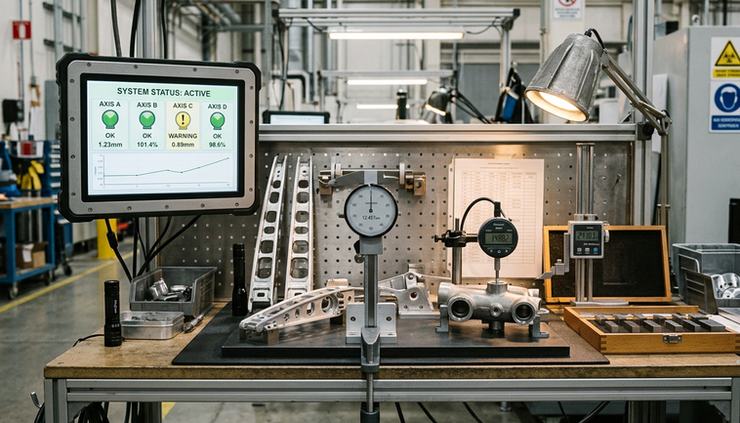
This is the practical strength of How Magnetic Inspection Laboratory Uses IoT to Strengthen Aerospace Quality as a model. The technology is not treated as a novelty. It is used as part of a serious operating environment where awareness, timing, and traceability are tied to trust.
The human standard still comes first
A common mistake in industrial technology is treating automation as the main story. In aerospace quality, the main story remains people who know the stakes.
MIL’s quality culture, as described in the brief, does not need dramatic language to take life-preserving work seriously. The team already understands the seriousness of parts used in flight, space, defence, and other critical systems. IoT supports that mindset by helping remove blind spots.
The best connected systems serve the people who use them. They reduce the chance that a process change goes unnoticed. They make alerts clearer. They give maintenance and quality teams data they can review. They make it easier to act before the situation becomes urgent.
That matters because many quality failures do not start as dramatic events. They begin as small deviations:
A condition drifts.
An asset behaves differently.
A room or process area changes after hours.
A minor utility problem affects a key system.
A pattern repeats, but no one sees the trend at first.
When those signals become visible, the organisation can respond with discipline instead of guesswork.
What other aerospace suppliers can learn from MIL
MIL’s use of IoT offers lessons for any supplier working in high-requirement manufacturing, testing, finishing, or inspection. The lesson is not simply to buy sensors. It is to connect monitoring to the real risks and routines of the plant.
Start with the process, not the device
The strongest monitoring plans begin with operational questions. What conditions must remain stable? Which assets create the greatest risk if they fail? Where would a delayed response affect quality, safety, or delivery?
Once those questions are clear, sensor placement and alert rules become more meaningful.
Monitor what people cannot always see
Manual checks remain useful, especially when trained workers know what to look for. The best targets for IoT are often the gaps between checks, remote areas, after-hours risks, and conditions that change slowly over time.
Make alerts specific enough to act on
Too many alerts can train people to ignore them. Too few can leave the plant exposed. A useful system sends clear alerts tied to defined thresholds, locations, and responsibilities.
Keep data tied to accountability
Data only creates value when someone reviews it, responds to it, and improves from it. Teams need ownership of alerts, maintenance follow-up, and process review. Connected monitoring works best when it becomes part of the normal quality rhythm.
Use history to improve, not only to react
Real-time alerts help with immediate response. Historical trends help with prevention. Over time, data can show repeated patterns, weak points, and opportunities to adjust maintenance schedules or improve controls.

A stronger future for mission-critical quality
Magnetic Inspection Laboratory’s work sits close to the heart of aerospace trust. Since 1942, it has served industries where performance, durability, and inspection discipline matter deeply. Its use of Monnit IoT monitoring adds another layer to that work by improving visibility across equipment, facilities, and processes.
The larger point is simple. Aerospace quality is not protected by one inspection, one policy, or one technology. It is protected by a system that helps skilled people see clearly, respond quickly, and keep critical processes ready.
For MIL, IoT strengthens that system. It turns plant conditions into signals. It supports readiness. It gives teams better information before problems grow. In a field where lives can depend on the quality of a single part, that kind of awareness is not extra. It is part of doing the work right.


