.png)
Wireless Water Leak Detection for Buildings and Plant Rooms
A small leak rarely looks urgent at first. A slow drip under an air-conditioning unit, a weeping valve in a plant room, or water collecting behind equipment can seem minor until it reaches electrical gear, flooring, insulation, stock, or critical systems.
That is the real risk with water leaks in buildings. The damage often happens between inspections.
Wireless water-detection systems help close that gap. Instead of relying only on scheduled checks or someone noticing a wet floor, sensors can monitor vulnerable areas and send an alert when water is detected. For plant rooms, server rooms, laboratories, commercial kitchens, pump rooms, and other hard-working spaces, that early warning can make the difference between a quick clean-up and a costly incident.
Monnit offers wireless water-detection solutions that include both spot sensors and sensing rope options. ProSense can help match those sensing methods to the building, the risk area, and the way the response team needs to be alerted.
Why small water leaks become large building problems
Water damage is not always caused by a burst pipe. In many commercial and industrial buildings, the more common risk is a small leak that goes unnoticed for hours, days, or longer.
That can happen when the leak starts:
Beneath an air-conditioning unit
Behind plant or process equipment
Under a sink, bench, or appliance
Around pumps, tanks, or pipe joints
Near floor wastes or drainage points
In rooms that staff only enter occasionally
The first visible sign may not be the leak itself. It may be a stained ceiling tile, a damp patch near a wall, a tripped electrical circuit, corrosion, mould, damaged stock, or equipment that has already been exposed to water.
In plant rooms, water can spread quickly because floors are often hard, flat, and connected by penetrations, drains, plinths, and cable paths. In server rooms and electrical areas, even a small amount of water can create a serious operational risk. In laboratories and commercial kitchens, leaks may also affect hygiene, safety, and compliance tasks.
The value of Wireless Water Leak Detection for Buildings and Plant Rooms is simple. It gives maintenance teams a way to know about water before the problem has time to grow.
How wireless water detection works
A wireless water-detection system usually has three main parts.
The first part is the sensor. This is the device placed in the area where water may appear. Depending on the sensor type, it may detect water at a single point or along a length of sensing rope.
The second part is the wireless gateway. The sensor communicates wirelessly with the gateway, which then passes data to the monitoring platform. This avoids the need to run signal cable back from every leak detection point, which can be helpful in existing buildings, tight plant rooms, or areas where cabling is difficult.
The third part is the monitoring and alert platform. When the sensor detects water, the platform can issue an alert so personnel can investigate. Alerts can be configured to suit the site’s response process, such as notifying maintenance staff, facilities teams, contractors, or other responsible personnel.
A good system is not just about the sensor. It also needs the right sensor position, reliable wireless communication, suitable gateway location, and clear alarm settings. If any of these are wrong, the system may not give the warning people expect.
Spot sensors are suited to defined leak points
Spot sensors are used where the likely leak location is small and predictable.
They are often suitable for areas such as:
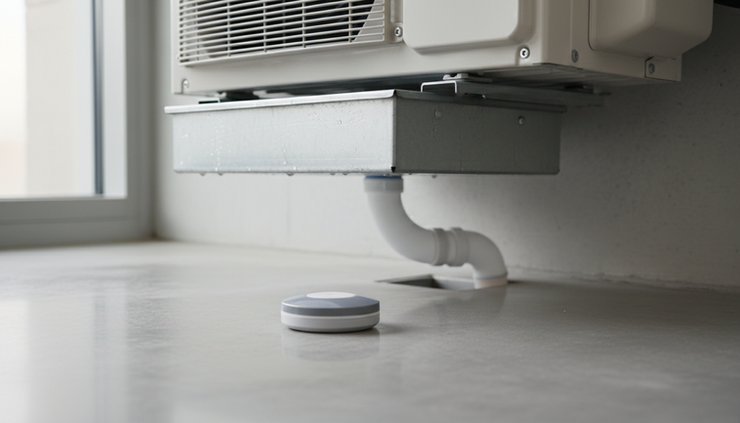
Under an air-conditioning condensate tray
Behind a piece of equipment with a known drain or hose
Beneath a sink or laboratory bench
Near a pump seal or valve assembly
At a low point where water is expected to collect
Beside a tank, pipe joint, or appliance connection
A spot sensor works best when water has a clear path to the sensor. Placement matters. If a sensor sits on the wrong side of a plinth, threshold, fall in the floor, or raised edge, water may not reach it until much later.
This is why site assessment is important. In some rooms, the obvious position is not the best position. The correct location may be the lowest point, the path where water naturally travels, or a spot near the most likely failure point.
Spot sensors are often a practical choice where the risk is localised. They are simple to place, easy to understand, and useful for targeted monitoring.
Sensing rope is better for larger or less predictable areas
Some leak risks are too broad for a single spot sensor. Water may appear anywhere along a wall, around a plant item, under a row of equipment, or across a larger floor area.
This is where sensing rope can be useful.
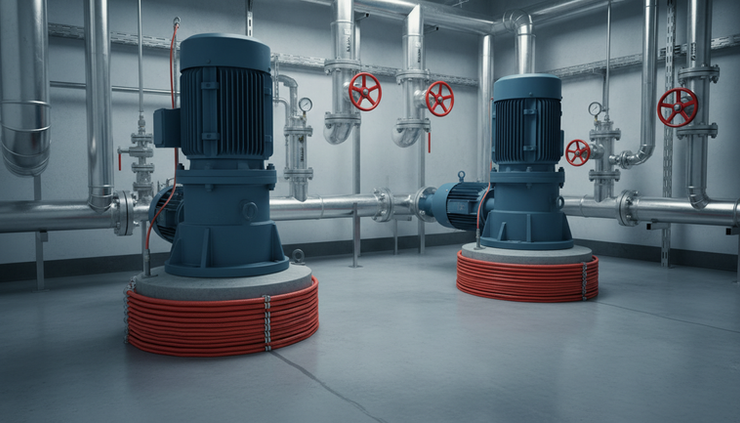
A sensing rope detects water along its length. It can be laid around the perimeter of a risk area, routed beneath equipment, placed near likely water paths, or used to cover a longer run than a single spot sensor can reasonably monitor.
Typical uses include:
Around air-conditioning equipment
Along walls in server rooms
Beneath rows of laboratory benches
Around pump sets or skids
Near tanks and dosing systems
Along the front of commercial kitchen equipment
Around low-level pipework in plant rooms
The key benefit is coverage. Instead of waiting for water to reach one fixed point, the rope can detect water where it contacts the sensing cable.
Rope length matters. Too short, and part of the risk area remains unmonitored. Too long or poorly routed, and it may be harder to maintain, inspect, or understand during an alarm response. The aim is to cover the credible leak path without creating a messy or fragile installation.
A well-planned sensing rope installation also allows people to inspect the area quickly. When an alert comes through, responders should be able to look at the monitored zone and find the source without confusion.
Common areas where leak detection should be considered
Water-detection sensors can be useful anywhere a leak could damage property, interrupt operations, or create safety issues. In practice, certain building areas deserve closer attention.
Plant rooms
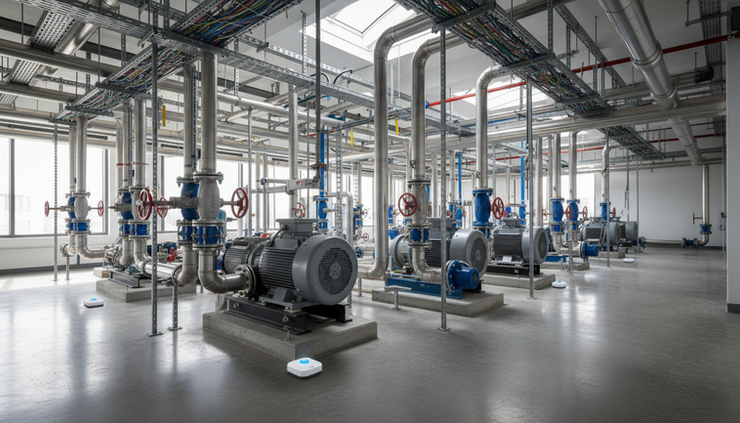
Plant rooms often bring together pumps, valves, tanks, air-conditioning systems, water treatment gear, and pipework. They may also sit above occupied areas, storage spaces, or electrical rooms.
Leaks in plant rooms can come from many sources, including seals, flanges, flexible hoses, drain lines, and condensate systems. Wireless sensors can help monitor the areas most likely to develop leaks, especially where staff do not inspect the room continuously.
Server rooms and communications rooms
Water and IT equipment are a poor combination. Even where pipework is not present inside the room, water can enter from adjacent spaces, ceiling leaks, air-conditioning units, or drainage issues.
Sensing rope is often useful around room perimeters, under cooling units, or near known water paths. Spot sensors may also suit specific equipment risks.
Laboratories
Laboratories may include sinks, benches, water-fed equipment, chillers, pumps, and waste lines. A minor leak can affect equipment, samples, floors, cabinetry, or adjacent areas.
Sensors can monitor under benches, behind equipment, or along areas where water may travel before staff notice it.
Commercial kitchens
Commercial kitchens contain water supply lines, dishwashing equipment, floor wastes, ice machines, refrigeration equipment, and cleaning areas. They are busy spaces, so leaks may be mistaken for normal washdown or spills.
Leak detection should be placed carefully to avoid nuisance alarms from expected wet processes while still protecting key risk points.
Pump rooms
Pump rooms can be high-risk because water is already part of the system being managed. Seal leaks, pipe failures, tank overflows, or drainage problems may create standing water.
Spot sensors may suit known failure points, while sensing rope can cover a broader area around pump sets.
Planning the right sensor layout
Choosing between spot sensors and sensing rope is not only a product choice. It is a design decision.
The layout should start with a few practical questions.
Where could water come from?
Common sources include pumps, valves, condensate trays, pipe joints, tanks, hoses, appliances, and drains.
Where will water travel?
The floor may slope toward a drain, doorway, low point, or service penetration. Water rarely spreads evenly.
What needs protection first?
Electrical equipment, servers, stock, lab instruments, walls, flooring, tenancy areas below, and access paths may all change the priority.
How fast does the response need to be?
A plant room leak above a critical area may need faster escalation than a small leak in a low-risk storeroom.
What conditions could cause false alarms?
Washdown, routine cleaning, condensation, open drains, and wet processes should be reviewed before final placement.
A good design may use both sensor types. For example, a plant room might use spot sensors below specific valves and sensing rope around a larger pump skid. A server room may use sensing rope around the perimeter and spot sensors under cooling units.
Gateway location is part of the system design
Wireless sensors still need a reliable communication path. The gateway location plays a major role in that.
Plant rooms can be challenging wireless environments. They may include concrete walls, steel doors, metal pipework, tanks, electrical equipment, and other obstructions. Basements and service areas can also have poor signal paths.
Gateway placement should consider:
Distance between sensors and the gateway
Walls, floors, and metal barriers
Access for power and maintenance
Mobile or network connectivity, depending on the gateway type
Future expansion if more sensors may be added later
The aim is not just to get a signal during installation. The system should keep communicating after doors close, equipment runs, and normal building conditions return.
ProSense can help assess gateway location so the wireless system is set up to suit the building, not just the drawing.
Alarm configuration should match the response process
An alarm is only useful if it reaches the right people and leads to action.
Water detection alerts should be configured around the site’s real response process. That may include a facilities manager during business hours, an on-call contractor after hours, or a nominated internal team for critical rooms.
Alarm settings may need to account for:
Who receives the first alert
What happens if the alert is not acknowledged
Whether different rooms need different escalation paths
How alerts are named so responders know where to go
How testing and maintenance alarms are handled
Who can update contact lists when staff or contractors change
Clear naming helps. An alert that says `Water detected in Plant Room 2 near chilled water pumps` is more useful than a vague device name. The person receiving the alert should know where to go and what kind of risk to expect.
This is also where monitoring platform setup matters. The sensor may detect water correctly, but unclear alarm routing can still delay response.

What ProSense brings to water-leak monitoring projects
Every building is different. The best sensing method depends on the room layout, leak sources, floor conditions, equipment, response expectations, and wireless coverage.
ProSense can help determine:
The most suitable sensing method
The required sensing rope length
The best sensor positions
The gateway location
The alarm configuration
The monitoring approach for each installation
This support is useful because water detection is easy to under-design. A single sensor placed in the wrong location can create a false sense of security. A rope installed without thought for water paths may miss a likely leak route. A gateway placed in a poor location may affect communication. An alarm sent to the wrong contact may sit unseen.
The goal is a practical system that works in the real building. That means placing sensors where water is likely to appear, routing sensing rope where it gives useful coverage, and setting alerts so people can respond quickly.
A simple way to think about sensor choice
The choice between a spot sensor and sensing rope can often be narrowed down with one question.
Do you know exactly where the water will appear?
If the answer is yes, a spot sensor may be suitable. If the answer is no, sensing rope may provide better coverage.
That said, many installations benefit from a mix of both. Spot sensors protect clear risk points. Sensing rope covers broader zones and uncertain leak paths. Together, they can create a more complete water detection plan for high-value or high-risk areas.
Wireless systems also make staged rollouts easier. A site may begin with the highest-risk plant rooms, then add sensors to server rooms, laboratories, kitchens, or pump rooms as needs change.
The takeaway for building and facilities teams
Water leaks do not need to be large to cause major disruption. The longer a leak remains hidden, the more likely it is to damage equipment, finishes, stock, or critical building systems.
Monnit wireless water-detection solutions give buildings a way to monitor vulnerable areas using spot sensors, sensing rope, gateways, and a monitoring platform that can issue alerts when water is detected. ProSense can help select the right sensing method, rope length, gateway location, and alarm setup for each site.
Start with the rooms where a small leak would cause the most trouble. Then design the detection layout around real leak sources, real water paths, and the people who need to respond.


