.png)
Smart Monitoring Systems for Safer Food and Less Waste
One failed fridge can turn a good trading day into a costly one. By the time staff notice warm milk, soft seafood, or thawing frozen stock, the business may already be facing discarded food, refunds, cleaning costs, and hard questions from regulators.
Food safety depends on habits, training, equipment, and proof. Temperature sits at the centre of all four. For restaurants, caterers, grocers, aged care kitchens, food manufacturers, and cold-chain suppliers, smart monitoring systems make temperature control easier to manage and harder to ignore.
They do not replace good food handling. They do give teams a faster way to spot problems, act early, and keep records that show what happened.

Food safety starts with temperature control
Many food safety failures begin quietly. A fridge door does not seal properly. A freezer cycles too often. A delivery sits out too long during a busy service. Hot food cools slowly before storage. None of these problems looks dramatic at first, yet each one can create the conditions for bacteria to grow.
In Australia, potentially hazardous food generally needs to be kept cold at 5°C or below or hot at 60°C or above. These limits matter because foods such as cooked rice, meat, seafood, dairy, cut fruit, and ready-to-eat meals can become unsafe when they spend too long in the temperature danger zone.
Manual checks can help, but they have limits. A paper log might show a fridge was safe at 8:00 am and 2:00 pm. It may not show that the temperature rose for 90 minutes between checks. It may not show that a staff member wrote down a target temperature instead of the actual reading during a rush.
A smart monitoring system fills those gaps. Sensors track temperature at set intervals, then send the readings to software where managers can view trends, alerts, and reports. Some systems can also monitor humidity, door openings, and equipment performance.
The biggest benefit is not the technology itself. The benefit is earlier action.
When a cool room starts warming, the right person can receive an alert before stock reaches an unsafe temperature. When a freezer struggles during summer, the system can show the pattern before it fails. When a delivery arrives warm, staff can record the issue and make a clear decision.
What smart monitoring systems actually do
A smart food safety setup usually combines three parts:
Component | What it does | Why it matters |
Sensors | Measure temperature, humidity, or door activity | Creates a continuous record of storage conditions |
Connectivity | Sends readings through Wi-Fi, cellular, Bluetooth, or a gateway | Lets staff see issues without standing beside the unit |
Software | Stores data, sends alerts, and creates reports | Turns readings into useful food safety records |
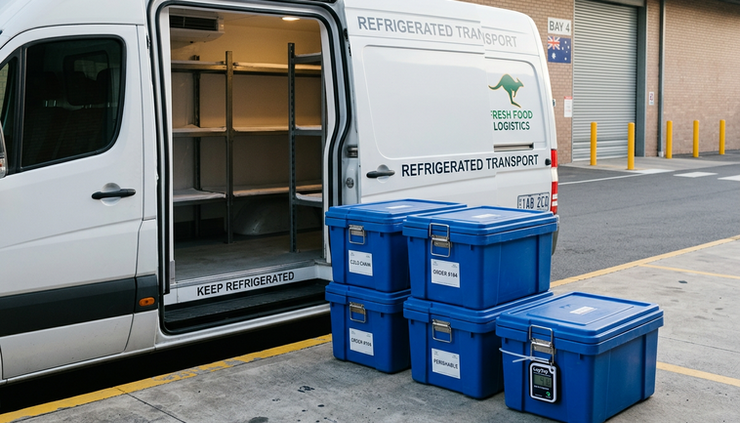
The setup can be simple. A small café might place sensors in two under-bench fridges, one display cabinet, and one freezer. A food distributor might use sensors across cool rooms, loading docks, delivery vehicles, and customer drop-off points.
The system watches for readings outside the set range. When that happens, it can send alerts by app, SMS, email, or dashboard notification. A good alert is specific enough to guide action. It should tell staff which unit is affected, what the reading is, and how long the issue has continued.
That matters because a short temperature rise may need a different response from a long one. A fridge door left open for two minutes during restocking is not the same as a compressor failure overnight.
A useful system also creates a history. Managers can see whether a unit has repeated temperature spikes, whether the issue happens during deliveries, or whether one shift misses checks more often than others. These patterns help businesses fix causes, not just symptoms.
Less spoilage means less waste and less profit loss
Food waste is not only an environmental issue. It is a direct hit to margin.
Spoiled stock costs more than the purchase price. There is also labour, storage, lost sales, replacement ordering, disposal, and the risk of disappointing customers. For smaller food businesses, one large stock loss can be serious. For larger operators, repeated small losses across many sites can add up quickly.
Smart monitoring helps reduce waste in several practical ways.
It catches equipment problems early.
A fridge that slowly rises from 3°C to 6°C may still look fine when opened. The food may feel cool to touch. A sensor can show the drift and alert staff before the fridge sits warm for hours.
It supports better maintenance.
Temperature records can show when equipment is working harder than usual. If a cool room has frequent spikes or slower recovery after door openings, maintenance can check seals, fans, coils, or refrigerant before a breakdown.
It helps protect stock during quiet hours.
Many costly failures happen overnight, on public holidays, or when a site is closed. Smart alerts give managers a chance to move stock, call a technician, or investigate before opening.
It gives confidence when making disposal decisions.
Without data, staff may throw out food because they cannot prove it stayed safe. At other times, they may keep food that should be discarded. Better records support clearer decisions.

Better records make compliance less stressful
Food businesses need records that stand up to review. This may include temperature logs, corrective actions, maintenance notes, delivery checks, and cleaning records. The exact requirements can vary by business type, state or territory, and council expectations, but the need for clear evidence is common.
Manual records create several problems:
They can be missed during busy periods.
Handwriting can be hard to read.
Staff may forget to record corrective action.
Paper forms can be lost or damaged.
Managers may not see a problem until days later.
Digital monitoring does not remove the need for food safety procedures. It can make those procedures easier to follow.
A good system can show:
The temperature of each monitored unit over time
When readings went outside the safe range
Who received the alert
What action staff took
When the unit returned to range
Reports for audits, internal reviews, or investigations
For HACCP-based programs, this can support monitoring of critical control points. For restaurants and food service venues, it can help keep daily checks consistent. For distributors, it can support cold-chain proof across storage and transport.
The key is to treat the system as part of the food safety program, not a gadget on the wall. Staff still need to know what each alert means and what action to take. If an alert sounds and nobody responds, the business has data but no protection.
Safer food can also taste better
Food safety often gets discussed in terms of risk, illness, and compliance. Those things matter. Yet temperature also affects quality.
Fresh produce wilts faster when storage conditions are poor. Dairy can pick up off flavours. Meat and seafood lose texture. Frozen food can suffer from ice crystal growth when temperatures fluctuate. Prepared meals can dry out or break down if cooling and reheating are not controlled well.
Smart monitoring helps protect the eating experience by keeping storage conditions steadier. That means fewer surprises during prep and service.
For restaurants, this can improve consistency. The salad greens hold better. The desserts set as expected. The proteins arrive at the pass in the condition the chef planned.
For retailers, it can protect display quality. Customers judge food with their eyes before they read a label. A display cabinet that runs too warm or too cold can make products look tired, damaged, or unappealing.
For manufacturers and suppliers, stable temperatures can help maintain quality through more of the chain. If a product leaves the facility in good condition but travels through poor storage, the brand may still take the blame.
Food safety and food quality are linked. When one slips, the other often follows.
Where monitoring creates the most value
Not every area needs the same level of attention. The best starting point is to look at where temperature failure would create the greatest risk or cost.
Common high-value monitoring points include:
Walk-in cool rooms
Freezers
Under-bench fridges
Display cabinets
Hot holding units
Blast chillers
Delivery vehicles
Loading docks
Remote storage sites
Combi ovens or cook-chill areas, where suitable sensors are used
The risks differ by business. A sushi outlet may care most about seafood storage and rice handling. A childcare kitchen may focus on ready-to-eat meals, dairy, and safe cooling. A butcher may need strong records for cool rooms, display cases, and transport. A distributor may need proof across several handover points.
Start with the areas where a failure would force disposal, affect vulnerable customers, or create a serious compliance issue. Then add monitoring where manual checks are weak, such as overnight storage, after-hours deliveries, or mobile refrigeration.
Alerts only work when the response is clear
An alert is useful only if it leads to the right action. Before installing sensors, decide what should happen when a reading goes out of range.
A clear response plan should cover:
Who receives alerts
Choose the right staff for each time period. A store manager may handle daytime alerts. An owner, maintenance contractor, or duty manager may need after-hours alerts.
When the alert escalates
If nobody confirms the first alert, the system should notify someone else. This is especially useful overnight or across multiple sites.
What staff check first
The response might include checking the door seal, confirming the reading with a calibrated probe, moving stock, recording food condition, or calling maintenance.
How decisions are recorded
If food is discarded, moved, or kept, staff should record why. This protects the business and supports consistent decisions.
When equipment returns to service
A fridge that appears to recover may still need attention. Staff should know when to restart use and when to keep the unit empty until it has been checked.
This is where training matters. Staff should not need to guess during a busy service. Simple instructions, kept near equipment and included in onboarding, can make the difference between a useful alert and a missed opportunity.
Choosing a system that suits the business
A small venue does not need the same setup as a national food distributor. The right system should match the risk, scale, budget, and staff capacity of the operation.
Look for these features before buying:
Accurate sensors suited to the environment
Easy calibration or clear calibration support
Alerts that can reach staff outside the venue
Battery life that fits the site’s maintenance routine
Reports that are simple to export and read
Clear user permissions for managers and staff
Reliable connectivity, especially in cool rooms and remote areas
Local support or clear technical help
Data storage that suits food safety record needs
Connectivity deserves close attention. Cool room walls and metal shelving can interfere with signals. A site visit or test period can reveal weak spots before the system becomes part of daily operations.
Also think about how the system fits with existing procedures. If staff already use a digital food safety app, choose monitoring that can connect with it or at least produce records in a format the team can use. If the business relies on paper forms, keep the first setup simple so staff can adjust without confusion.
Avoid buying only for features. A system with many options can still fail if staff cannot understand it. The goal is clear monitoring, fast alerts, and usable records.

Common mistakes that weaken monitoring
Smart systems are helpful, but poor setup can limit their value. The most common mistakes are easy to avoid.
One mistake is placing sensors in the wrong spot. A sensor near a door may record frequent spikes that do not reflect the product temperature. A sensor tucked too far into a corner may miss warm areas. Placement should reflect the food safety purpose of the reading.
Another mistake is setting alerts too narrowly or too broadly. If alerts trigger too often for minor changes, staff may ignore them. If thresholds are too loose, the warnings may arrive too late.
Some businesses also fail to review the data. The system may collect months of useful information, but nobody checks the trends. A short monthly review can reveal repeat issues, staff training gaps, or equipment that needs attention.
The biggest mistake is treating monitoring as a substitute for judgement. Temperature data informs decisions. It does not make every decision by itself. Staff still need to assess food type, time out of range, packaging, handling, and the relevant food safety procedure.
The best results come from simple habits
Smart monitoring works best when it supports everyday routines. It should make safe behaviour easier, not add a layer of confusion.
Strong habits include:
Checking the dashboard at the start of each shift
Responding to alerts as soon as practical
Recording corrective action in plain language
Reviewing recurring temperature problems
Keeping sensors clean and protected
Testing alerts after staff changes or phone number updates
Including monitoring steps in food safety training
The system should also have an owner. That person does not need to handle every alert, but they should make sure sensors work, records are reviewed, and staff know what to do.
For multi-site businesses, consistent setup matters. Use similar naming for equipment, common alert rules where possible, and standard response steps. This makes reporting easier and helps staff who move between sites.
Safer food is built on visibility
Food safety risks grow when problems stay hidden. A warm fridge, failing freezer, delayed delivery, or missed log entry can all create costs that reach far beyond one batch of stock.
Smart monitoring systems give food businesses better visibility. They help teams act before spoilage becomes waste, before a missed check becomes a compliance issue, and before unsafe food reaches a customer.
The best setup is not always the most complex. It is the one that tracks the right points, alerts the right people, and helps staff make sound decisions quickly.
For any food business that stores, transports, prepares, or serves temperature-sensitive products, better monitoring is a practical step toward safer food, lower waste, and more consistent quality.


