.png)
Monitor Industrial Equipment with Monnit Vibration Sensors
A small change in vibration can be the first visible clue that a bearing is wearing, a fan is drifting out of balance, or a pump is starting to cavitate. Left unchecked, that change can grow into heat, noise, product loss, unplanned downtime, and a much larger repair bill.
For many sites, the challenge is not knowing that vibration matters. The challenge is watching enough equipment often enough without running new signal cabling across a plant. Monnit wireless vibration meters and accelerometers give maintenance teams a practical way to observe equipment condition on motors, pumps, fans, compressors, and other rotating machinery.
They are not a replacement for a detailed engineering vibration analysis. They are best used for trend monitoring, early warning, and maintenance planning. Used well, they help reveal when an asset deserves closer inspection before a fault becomes obvious on the production floor.
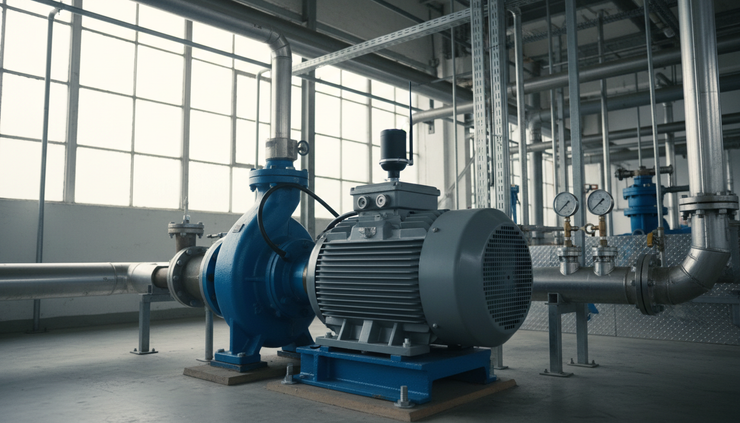
Why vibration is worth monitoring
Rotating equipment rarely fails without warning. Bearings wear, shafts misalign, couplings loosen, impellers become fouled, and mounting bolts work loose. These faults often change how the machine vibrates before they cause a complete failure.
A technician may notice the change by sound or feel during a site walk. The problem is that site walks are periodic and subjective. A machine may run normally during one inspection and start degrading soon after. A heavier production week, a blocked filter, or a process change can also shift vibration patterns between checks.
Vibration monitoring helps fill that gap by creating a record of machine behaviour over time.
Common signs that deserve attention include:
A steady increase in overall vibration
A sudden step change after maintenance or a process change
Repeated vibration spikes at certain operating conditions
Higher vibration during start-up or shutdown
Different readings between similar machines doing similar work
The value comes from context. One reading on its own may not mean much. A history of readings can show whether a machine is stable, drifting, or changing quickly.
That is where wireless sensors are useful. They make it easier to gather condition data from more assets, especially where traditional wired monitoring would be too costly or awkward.
How Monnit wireless vibration sensors fit into plant maintenance
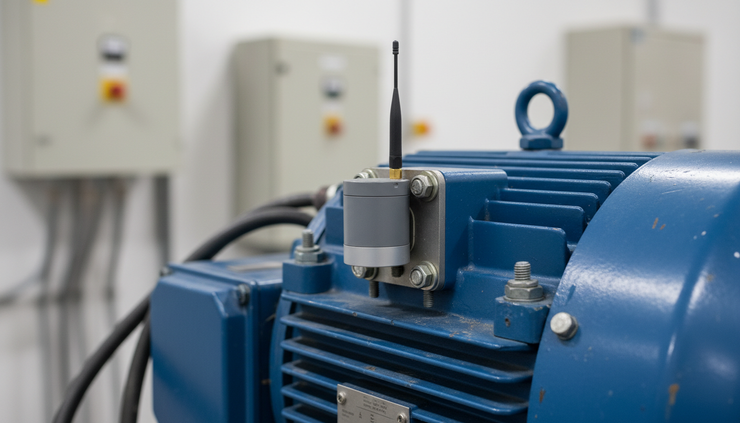
Monnit wireless vibration sensors measure movement and send readings through a wireless network to a monitoring platform. Depending on the model and setup, they can track vibration-related values such as acceleration, velocity, or general vibration activity.
The main advantage is simple: you can collect vibration trends without installing long runs of signal cable.
That matters in real industrial environments. Cables need routes, trays, glands, protection, termination, and ongoing maintenance. On some assets, wiring is not practical because the machine is remote, mobile, outdoors, or fitted in a cramped area. Wireless sensing can reduce the installation barrier and allow a site to monitor more equipment than it otherwise would.
Typical uses include:
Electric motors on production lines
Centrifugal pumps in water, process, or chemical service
HVAC fans, blowers, and extraction systems
Air compressors and vacuum pumps
Gearboxes, conveyors, and driven rollers
Cooling tower fans and other remote rotating assets
Monnit devices are often used as part of a broader maintenance approach. They do not diagnose every fault on their own. Instead, they can flag a change that prompts the next action, such as an inspection, lubrication check, alignment check, bearing temperature review, or formal vibration analysis.
For many businesses, that is enough to change the maintenance conversation. Instead of asking, “When did someone last listen to this machine?”, the team can ask, “What has the vibration trend done over the past month?”
What changes in vibration can reveal
Vibration changes can point to different mechanical conditions. Wireless vibration trending does not usually provide the same level of detail as a full spectrum analysis, but it can still show that something has changed.
Imbalance
A fan, blower, or rotor can become unbalanced when material builds up, blades wear, or components are damaged. The machine may still run, but the increased vibration can stress bearings, mounts, and nearby pipework.
A trend that gradually climbs after weeks of normal operation may suggest fouling or wear. A sudden increase may follow a broken blade, impact, or maintenance event.
Misalignment
Motor and pump sets depend on correct alignment between shafts. Misalignment can increase vibration and place extra load on bearings and couplings.
If vibration rises after a motor replacement, coupling work, or base adjustment, it may be worth checking alignment before the machine continues in service.
Looseness
Loose mounting bolts, cracked bases, worn feet, or damaged supports can allow a machine to move more than it should. This can produce erratic or increasing vibration.
Wireless sensors can help detect when a previously stable asset starts behaving differently after repeated operation.
Bearing wear
Bearings often degrade over time. Early wear may not stop the machine, but it can change vibration behaviour. As damage grows, the machine may heat up, become noisy, or eventually seize.
A rising vibration trend can help maintenance teams schedule closer inspection, lubrication review, or replacement planning.
Process-related issues
Not every vibration change comes from a mechanical fault. Pumps may vibrate more during cavitation, low flow, or blocked suction conditions. Fans may respond to changing air flow, fouled filters, or damper positions. Compressors may behave differently under load.
That is why vibration data should be read alongside process conditions. A high reading may be a machine fault, an operating issue, or both.
Turning readings into useful maintenance decisions
A sensor does not improve reliability by itself. The value comes from how the readings are installed, reviewed, and acted on.
A practical monitoring plan starts with the assets that matter most.
Good candidates include equipment that:
Causes downtime when it fails
Has a known history of bearing, coupling, or alignment issues
Runs continuously or for long production periods
Is hard to inspect manually
Has repair lead times or critical spare parts
Supports safety, production, cooling, ventilation, or utilities
From there, the aim is to build a baseline. That means watching normal operating behaviour before deciding what counts as unusual. A pump that runs at variable speeds will not look the same as a fixed-speed fan. A lightly loaded motor may show different vibration than the same motor under full load.
A good baseline should reflect normal operation, including typical load ranges, start-up behaviour, and known process changes.
Once a baseline exists, thresholds can be set. These thresholds should not be guessed blindly. They should reflect the machine type, duty, sensor location, operating conditions, and site risk.
A simple example may include:
Monitoring level | What it can mean | Typical response |
Normal trend | Readings are stable within the expected range | Continue monitoring |
Watch level | Readings rise above the baseline or show repeated spikes | Check operation and plan inspection |
Alarm level | Readings increase sharply or remain high | Inspect promptly and consider planned shutdown |
Critical change | Vibration is severe or linked with noise, heat, or performance loss | Escalate maintenance action |
The exact limits should suit the asset. A small fan and a large compressor should not be treated the same.
Vibration trend data is most useful when it gives maintenance teams time to ask better questions before production is interrupted.
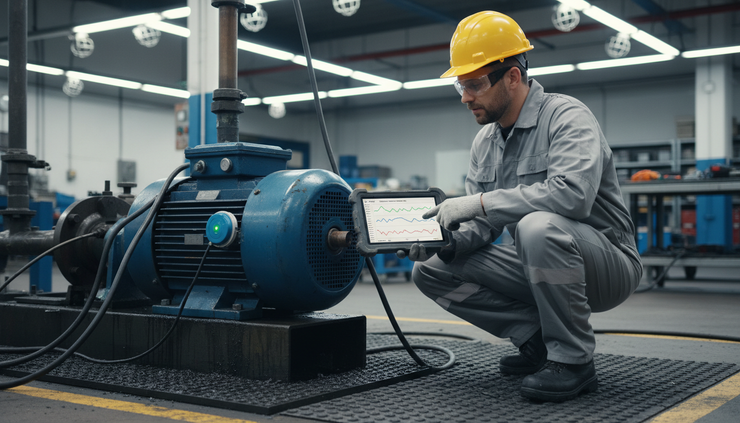
Wireless monitoring does not remove the need for engineering judgement
Wireless vibration monitoring is a highly useful early warning tool, but it has limits. This matters because vibration can be complex.
A detailed engineering vibration analysis may examine frequency spectra, harmonics, phase, resonance, bearing defect frequencies, machine speed, and structural response. That level of work can help identify specific fault types and recommend corrective action with greater confidence.
Wireless vibration meters and accelerometers are better viewed as part of a tiered approach.
They can help answer questions such as:
Is this machine behaving differently from last month?
Did vibration increase after the last service?
Is one unit in a group of similar machines changing faster than the others?
Should this asset move up the maintenance schedule?
Do we need a specialist vibration assessment?
They may not answer questions such as:
Which bearing element is damaged?
Is resonance contributing to the vibration?
What exact frequency component is driving the fault?
Is the root cause mechanical, structural, or process-related?
What correction will fully solve the issue?
That distinction keeps expectations realistic. A wireless sensor can help detect a developing issue. A skilled technician or vibration specialist may still need to confirm the cause.
This is especially true on critical, high-speed, high-value, or safety-related machinery. For those assets, wireless trending can provide early warning, while formal analysis supports diagnosis and corrective work.
Where to place vibration sensors
Sensor placement has a major effect on data quality. Poor mounting can hide useful signals or create misleading readings.
In general, sensors should be mounted as close as practical to the source of vibration being monitored. For motors, that often means near the drive-end or non-drive-end bearing housing. For pumps and fans, it may be near the bearing or casing area most linked to the rotating assembly.
The mounting point should be:
Firm and clean
Flat enough for good contact
Away from loose guards or thin covers
Protected from impact where possible
Suitable for the expected temperature and environment
Avoid placing sensors on flimsy sheet metal, removable covers, or parts that do not represent the machine’s main vibration path. A sensor on a loose guard may tell you more about the guard than the motor.
Orientation also matters. Some vibration changes appear more clearly in one direction than another. Depending on the sensor and application, monitoring one axis may be enough for simple trending. Other machines may benefit from multi-axis measurement.
For variable-speed equipment, speed changes can affect vibration. If possible, readings should be compared under similar operating conditions. A pump at low flow may not compare fairly with the same pump at normal duty.
Building a simple workflow that people will use
The best monitoring system is the one that fits daily maintenance work. If alerts are too frequent, people ignore them. If thresholds are too loose, problems slip through. If no one owns the response, readings become background noise.
A workable vibration monitoring workflow can be simple.
Start with a small group of important assets. Install sensors carefully and collect baseline readings. Review trends at regular intervals. Set initial warning levels, then refine them as the site learns what normal looks like.
Each alert should have a clear response path.
For example:
Check whether the machine was operating normally at the time.
Compare the reading with recent history.
Inspect for visible issues such as looseness, blocked flow, damaged guards, or unusual noise.
Review recent maintenance work or process changes.
Decide whether to keep watching, schedule repair, or request further analysis.
Keep records of what was found and what action was taken. Over time, this helps improve threshold settings and makes the monitoring system more useful.
A vibration alert that leads to no issue is not always a failure. It may show that thresholds need adjustment, or that operating conditions changed. The aim is to improve confidence over time.
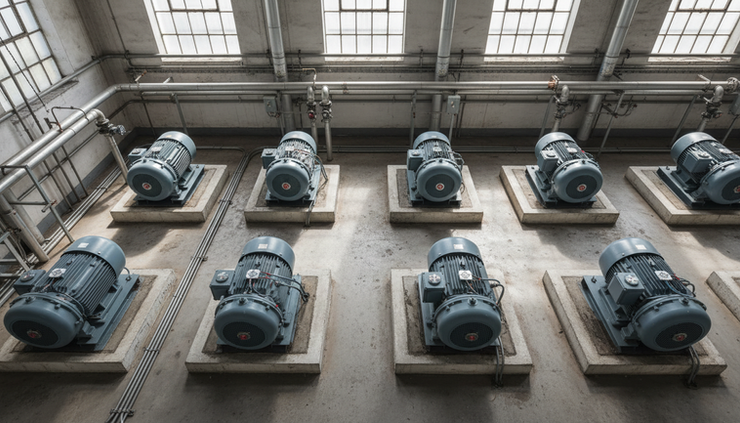
How ProSense can help with selection and thresholds
Choosing the right sensor is not only about measuring vibration. The site also needs to think about range, battery life, wireless coverage, mounting method, environmental conditions, and how people will use the data.
ProSense can assist with selecting suitable Monnit wireless vibration meters and accelerometers for the application. That support can include matching sensors to the equipment type, discussing installation requirements, and helping establish sensible monitoring thresholds.
Thresholds deserve care. A generic alarm point may be too sensitive for one machine and too relaxed for another. Motors, pumps, fans, and compressors can all behave differently. Load, speed, mounting, process conditions, and machine size all influence what readings look like.
A good setup recognises that wireless vibration trending is a maintenance aid, not a one-size-fits-all diagnosis tool. It helps identify change. It supports planned maintenance. It gives teams a reason to inspect. When the risk or complexity is high, it should sit beside expert vibration analysis rather than replace it.
A practical step towards condition monitoring
Many industrial sites want better condition monitoring but cannot justify a large wired vibration system on every asset. Monnit wireless sensors offer a practical middle path. They make it easier to watch more machines, build historical trends, and respond before small changes become major failures.
The strongest results come from a clear plan:
Monitor the assets that matter most
Mount sensors correctly
Build a reliable baseline
Set thresholds that suit the machine
Review trends in context
Escalate to detailed analysis when needed
Vibration rarely tells the whole story on its own, but it often tells you where to look next. For motors, pumps, fans, compressors, and other rotating equipment, that early clue can make maintenance more planned, less reactive, and easier to manage.


