.png)
How Dragino Sensors PLCs and ProSight Work Together to Power Smart Manufacturing
A machine can only improve what it can see. For many factories, the trouble is not a lack of equipment, it is a lack of clear, timely information from the floor. Motors run, pumps cycle, conveyors move, and tanks fill, but the data often stays trapped in local panels or isolated devices.
That is where Dragino sensors, PLCs, and ProSight can work well together. Dragino sensors help collect field data from places where wiring is costly or awkward. PLCs keep machines and processes under control. ProSight gives teams a clearer view of what is happening, so they can spot issues, compare trends, and make better operating decisions.
Used together, these tools can turn a traditional plant into a smarter, more connected operation without replacing every machine on site.

How the three layers fit together
Dragino sensors, PLCs, and ProSight each solve a different part of the automation problem.
Dragino devices are commonly used for remote sensing and IoT data collection. Many Dragino sensors and gateways are built around LoRaWAN, which suits long-range, low-power communication. That makes them useful for measuring things like temperature, humidity, water level, soil moisture, current, vibration, door status, and other field conditions.
PLCs, or programmable logic controllers, handle real-time control. They read inputs, run logic, and control outputs. In a factory, a PLC might start a pump, stop a conveyor, open a valve, trigger an alarm, or manage a packaging sequence. PLCs are built for reliability and deterministic control, which means they are still the backbone of industrial automation.
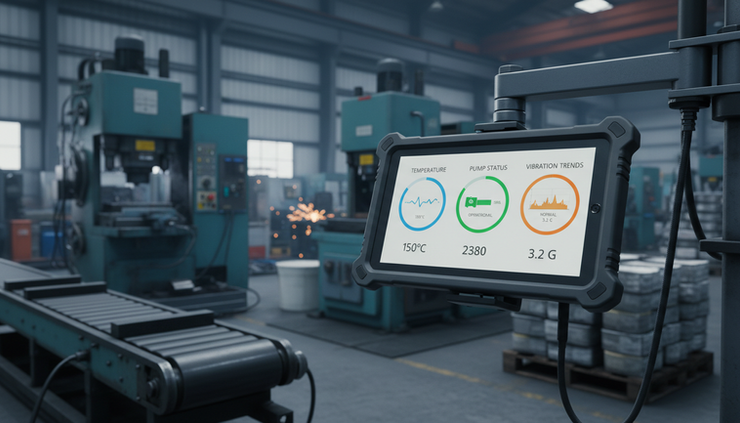
ProSight sits higher in the stack as a visibility and monitoring layer. Depending on the setup, it may collect data from controllers, sensors, gateways, databases, or APIs. Its value comes from turning raw readings into useful views, alarms, dashboards, reports, and trends.
A simple way to view the system is this:
Technology | Main job | Best suited to |
Dragino sensors | Collect field data, often wirelessly | Remote assets, hard-to-wire points, environmental conditions |
PLCs | Control equipment and process logic | Machines, pumps, conveyors, valves, safety-related interlocks |
ProSight | Display, analyse, and report on data | Operators, maintenance teams, supervisors, engineering teams |
The key is not to make one layer do everything. The best designs use each tool for what it does well.
What the data flow can look like
A common setup starts with Dragino sensors in the field. A temperature sensor might sit inside a cool room. A level sensor might monitor a water tank. A current sensor might measure whether a motor is running. These devices send data to a Dragino gateway over LoRaWAN or another supported path.
From there, the gateway can pass data to a network server, MQTT broker, cloud service, or local system, depending on the architecture. ProSight can then display the sensor values on dashboards, create alerts, and show trends.
The PLC still controls the plant. It may receive selected data from ProSight, a middleware layer, or a local gateway if the information is needed for control. More often, the PLC remains focused on machine logic, while ProSight handles monitoring and reporting.
This split matters. A low-power wireless sensor is useful for monitoring tank level every few minutes. It is not the right choice for an emergency stop circuit or a high-speed motion control loop. Industrial automation works best when critical control stays with the PLC, while wireless IoT sensing expands visibility around the process.

Use cases that show the combination in action
Monitoring cold storage in food manufacturing
Food and beverage sites often need tight temperature monitoring. A PLC may control compressors, fans, doors, and alarms inside a cold room. Dragino temperature and humidity sensors can add extra measurement points without running new cable through insulated panels.
ProSight can display room temperatures, door events, compressor run status, and alarm history in one place. Maintenance teams can see whether a temperature rise came from a door left open, a failed fan, or a refrigeration problem.
In a real plant, this can help teams move from reactive checks to continuous monitoring. Instead of relying only on manual readings, the site can see patterns. For example, a cool room that warms at the same time each afternoon may point to a loading routine, airflow issue, or door seal problem.
Watching pump stations and water systems
Many industrial sites have pump stations, trade waste pits, water tanks, and treatment systems spread across large areas. Some are far from the main control room. Running cable to every level point or flow indication can be expensive.
Dragino level sensors or digital input devices can monitor tank levels, float switches, flow pulses, or pump status. The PLC can still control pump starts, duty rotation, and fault handling. ProSight can show the whole system on a single dashboard.
This is useful for factories, councils, mining support sites, farms, and utilities. In Australia, long distances across sites are common, so low-power wireless sensing can reduce installation effort.
A practical example is a wastewater sump that only receives visual checks once or twice a day. Adding a wireless level sensor gives earlier warning of rising levels. ProSight can flag abnormal behaviour, such as a pump running but the level not falling.
Improving packaging line reliability
On a packaging line, the PLC controls conveyors, diverters, sensors, label applicators, and reject stations. Dragino sensors can add non-critical condition monitoring around the line. This may include vibration on a motor, ambient temperature near equipment, or current sensing on auxiliary drives.
ProSight can show downtime events, vibration trends, and energy use alongside PLC fault codes. This helps maintenance teams separate the symptom from the cause.
For example, a conveyor may trip several times during a shift. The PLC records overload faults. A current sensor shows the drive load rising before each fault. A vibration sensor near a bearing shows a gradual change over several days. Together, these signals point to a mechanical issue before the line fails fully.
Tracking environmental conditions in warehouses
Warehouses and production areas often affect product quality, worker comfort, and equipment performance. Dragino humidity, temperature, CO2, or light sensors can cover wide areas at low power. The PLC may not need this data for direct control, but the site still benefits from knowing it.
ProSight can build heat maps, trend humidity swings, or compare conditions across zones. This helps with storage quality, condensation risk, and process stability.
A plastics manufacturer, for example, may find that humidity spikes link to material handling issues. A metal fabrication site may use temperature and humidity trends to understand corrosion risk in storage areas. These are not always PLC control problems, but they are real operational problems.
The main benefits of combining Dragino sensors, PLCs, and ProSight
The value comes from the combination, not from any single product.
Lower installation cost for extra data points
Wireless sensors can help teams add measurements where cable runs are difficult, costly, or disruptive. This is useful in older plants where spare conduit is limited or machines are already crowded with wiring.
Better visibility across plant and remote assets
A PLC panel may show the local state of one machine. ProSight can bring many machines, rooms, tanks, and sensors into a single view. This helps supervisors and maintenance teams make decisions with shared data.
Faster fault finding
When teams only have PLC alarms, they may know what stopped but not why it stopped. Dragino sensors can add context. Temperature, vibration, current, level, and environment data can all help explain faults.
Support for predictive maintenance
Predictive maintenance does not need to start with complex models. It often begins with simple trends. A motor current that slowly rises, a pump that runs longer to move the same volume, or a bearing area that vibrates more than usual can all warn of trouble.
Safer and less disruptive upgrades
Many factories cannot afford long shutdowns. Adding wireless monitoring beside existing PLC systems can be a staged upgrade. Teams can start with one line, prove the value, then expand.
Challenges to plan for before installation
Smart manufacturing projects can fail when teams focus on devices and ignore the system around them. The hardware matters, but so do networks, naming, security, and maintenance.
Wireless coverage and signal quality
LoRaWAN handles distance well, but factories can be harsh radio environments. Steel structures, tanks, switchboards, cool rooms, and moving equipment can affect signal strength.
Before a full rollout, test signal coverage in the real location. A sensor that works on a bench may behave differently behind a stainless-steel tank or inside a plant room.
Useful checks include:
Measure signal strength at the planned mounting spot
Test during normal production, not only during shutdown
Check gateway placement and antenna height
Avoid mounting sensors directly behind large metal barriers
Keep spare capacity for future devices
Data timing and control expectations
Not all data needs to arrive every second. Some Dragino sensors are made for low-power periodic reporting, which is ideal for environmental monitoring. It is less suited to fast machine control.
Set clear rules early. Decide which signals are for monitoring, which are for alarming, and which, if any, are used by the PLC for control decisions.
As a rule, keep time-critical and safety-critical logic inside the PLC and certified control systems. Use wireless IoT data as a support layer unless the application has been carefully engineered for control use.
Protocols and integration work
PLCs, gateways, and platforms may use different protocols. Common industrial and IoT options include Modbus, MQTT, OPC UA, HTTP APIs, and vendor-specific drivers.
A clean architecture avoids fragile one-off connections. Middleware can help translate data between systems, buffer messages, and apply consistent naming.
For example, a Dragino gateway may publish sensor data using MQTT. ProSight may consume that feed directly or through an integration server. A PLC may share machine status through Modbus TCP or OPC UA. The integration plan should define how each tag flows through the system.
Cyber security
Connecting plant data to dashboards and cloud services can increase risk if security is weak. Treat IoT sensors and gateways as part of the industrial network, not as casual accessories.
Good practice includes:
Change default passwords before commissioning
Use network segmentation between IT and OT systems
Limit access to only the services required
Keep firmware updated through a controlled process
Use encrypted communication where supported
Document every device, gateway, IP address, and data path
Data overload
More sensors can create more noise. A dashboard filled with every possible value will not help operators.
Start with the decisions people need to make. Then collect the data that supports those decisions. A useful ProSight dashboard might show ten well-chosen values instead of a hundred raw readings.
Practical tips for a successful rollout
A good implementation usually starts small and expands with proof.
Begin with a clear use case. Pick one pain point, such as missed tank level alarms, cold room temperature drift, or repeated conveyor faults. Define what success looks like before buying hardware.
Map the current control system. List the PLCs, networks, panels, spare inputs, communication ports, and existing SCADA or historian tools. This prevents surprises during commissioning.
Choose sensor locations with maintenance in mind. A wireless sensor still needs battery checks, cleaning, calibration, and physical access. Do not mount it where a technician needs a scissor lift for a simple replacement unless there is no better option.
Name tags consistently. Tag names should make sense across Dragino devices, PLCs, and ProSight. For example, use a clear pattern for site, area, asset, measurement, and unit. Consistent naming saves time later.
Build dashboards for roles, not for technology. Operators need status and alarms. Maintenance teams need fault history and trends. Managers may need plant availability, throughput, or energy indicators. One dashboard rarely serves everyone well.
Test alarms carefully. An alarm that fires too often will be ignored. One that fires too late has little value. Use real process knowledge to set thresholds, delays, and escalation rules.
Document the system as it grows. Keep a live record of sensors, gateways, PLC registers, data topics, dashboard tags, calibration dates, and support contacts. This documentation becomes essential when staff change or the system expands.
A practical example of staged implementation
Consider a mid-sized manufacturer with an older packaging area, a chilled store, and a small wastewater pit. The PLCs run reliably, but the site has poor visibility outside the main machines.
The team could start with three stages.
Stage one adds Dragino temperature sensors to the chilled store and connects them to ProSight. The dashboard shows current temperature, door events, and trend history. This improves compliance checks and helps identify when loading practices cause temperature swings.
Stage two adds wireless level monitoring to the wastewater pit. The PLC still controls the pump, but ProSight now shows level trends and pump run behaviour. Maintenance can see early signs of pump wear or blockage.
Stage three adds current and vibration sensing around a troublesome conveyor. PLC faults, motor load, and vibration trends appear together in ProSight. The maintenance team can plan repairs before a full breakdown stops production.
None of these stages require ripping out the existing PLCs. The site adds visibility around the control system, then uses that visibility to make better decisions.

The takeaway for smart manufacturing teams
Dragino sensors, PLCs, and ProSight make a strong combination when each layer has a clear role. Sensors collect extra field data. PLCs keep equipment running safely and predictably. ProSight turns scattered signals into information people can use.
The best projects start with one real operational problem, not a vague goal to “go smart”. Choose a machine, room, tank, or process that needs better visibility. Add the right sensors. Connect the data cleanly. Keep critical control in the PLC. Build ProSight views that help people act.
Smart manufacturing does not have to begin with a full plant rebuild. Often, it starts with one missing measurement, one clearer dashboard, and one better decision made at the right time.


