.png)
Exploring the Benefits and Features of NB-IoT LTE-M Temperature Sensors for Reliable Remote Monitoring
Temperature monitoring plays a critical role in many industrial and agricultural settings. Accurate and consistent data helps maintain product quality, ensure safety, and optimize processes. However, remote locations often pose challenges for reliable communication and sensor deployment. The Cellular NB-IoT / LTE-M Temperature Sensor offers a practical solution by combining long-range connectivity with precise temperature measurement, all without the need for LoRaWAN gateways. This post explores the key features and benefits of this sensor, focusing on its suitability for remote monitoring in Australia and similar environments.
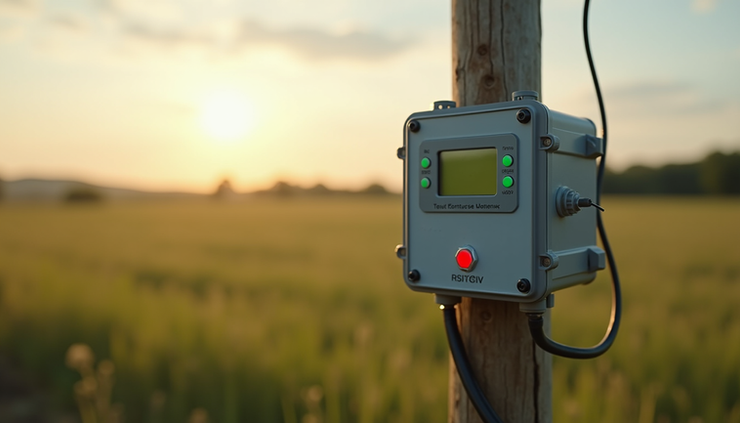
Reliable Long-Range Temperature Monitoring Without Gateways
Traditional wireless temperature sensors often rely on LoRaWAN gateways to transmit data over long distances. These gateways add complexity, cost, and maintenance requirements, especially in remote or hard-to-access areas. The Cellular NB-IoT / LTE-M Temperature Sensor eliminates this dependency by connecting directly to cellular networks designed for Internet of Things (IoT) devices.
NB-IoT (Narrowband IoT) and LTE-M (Cat-M1) are cellular standards optimized for low power consumption and wide coverage. They enable sensors to send small amounts of data over long distances with minimal energy use. This direct cellular connection means:
No need to install or maintain additional gateways
Simplified network architecture
Greater flexibility in sensor placement
Reliable data transmission even in remote or rural locations
This approach suits industries like agriculture, mining, and environmental monitoring, where sensors may be scattered across large areas without easy access to infrastructure.
Compatibility with Australia’s NB-IoT and Cat-M1 Networks
Australia has robust NB-IoT and LTE-M network coverage provided by major carriers. The sensor is fully compatible with these networks, ensuring dependable communication in remote regions where traditional cellular signals may be weak or unavailable.
Key points about compatibility include:
Supports multiple Australian carriers’ NB-IoT and Cat-M1 bands
Automatically switches between NB-IoT and LTE-M for optimal connectivity
Designed to handle network variations and maintain stable data flow
Enables real-time temperature monitoring without signal dropouts
This compatibility makes the sensor a reliable choice for Australian businesses needing continuous environmental data from isolated sites.
High-Accuracy DS18B20 Stainless-Steel Waterproof Probe
At the heart of the sensor’s temperature measurement is the DS18B20 probe, known for its precision and durability. This probe is encased in stainless steel and fully waterproof, making it suitable for harsh outdoor conditions.
Important specifications include:
Temperature range from -55°C to +125°C, covering most industrial and agricultural needs
Accuracy of ±0.5°C over the range of -10°C to +85°C, ensuring trustworthy readings
Fast response time to temperature changes
Resistance to corrosion, moisture, and physical damage
The stainless-steel probe can be placed in soil, water tanks, refrigeration units, or ambient air, providing versatile monitoring options.
Rugged IP66 Enclosure with Battery and Solar Power Options
The sensor’s enclosure meets IP66 standards, meaning it is dust-tight and protected against powerful water jets. This rugged design allows the device to operate reliably outdoors, even in extreme weather.
Power options enhance deployment flexibility:
Long-life battery capable of multi-year operation without replacement
Optional solar panel integration for continuous power in sunny locations
Low power consumption thanks to NB-IoT / LTE-M technology and efficient hardware design
These features reduce maintenance visits and support sustainable, off-grid installations.
Integration with ProSight Monitoring Software and IoT/SCADA Systems
Collecting temperature data is only useful if it can be accessed and analyzed effectively. The sensor integrates seamlessly with ProSight Monitoring Software, a platform designed for real-time data visualization, alerts, and reporting.
Benefits of this integration include:
Easy setup and configuration of sensors and alerts
Historical data logging for trend analysis and compliance
Compatibility with common IoT and SCADA systems via standard protocols
Remote management and firmware updates
This makes it straightforward for operators to monitor conditions, respond to issues quickly, and maintain operational efficiency.
Practical Applications in Industry and Agriculture
The combination of cellular connectivity, accurate sensing, and rugged design opens many use cases:
Agriculture: Monitor soil temperature to optimize irrigation and planting schedules, track storage conditions for produce, or check livestock environments.
Industrial sites: Ensure machinery and equipment operate within safe temperature ranges, monitor chemical storage, or track environmental conditions in remote facilities.
Environmental monitoring: Collect temperature data from weather stations, water bodies, or conservation areas without infrastructure challenges.
For example, a vineyard in a remote region can deploy these sensors to monitor frost risk and adjust protective measures in real time, improving crop yield and reducing losses.
Summary
The Cellular NB-IoT / LTE-M Temperature Sensor offers a reliable, accurate, and low-maintenance solution for remote temperature monitoring. Its direct cellular connectivity removes the need for gateways, while compatibility with Australian NB-IoT and Cat-M1 networks ensures dependable communication. The high-accuracy DS18B20 stainless-steel waterproof probe and rugged IP66 enclosure support operation in harsh environments. Battery and solar power options enable multi-year deployments with minimal upkeep. Integration with ProSight Monitoring Software and IoT/SCADA systems makes data management simple and effective.


