.png)
How ProSight Process Gives Businesses Real Time Visibility and Smarter Operations
A business can lose hours, stock, margin, and customer trust long before anyone sees the problem on a monthly report. The issue rarely starts with a lack of effort. It starts with blind spots.
Operations often sit across separate systems, teams, sites, spreadsheets, machines, vehicles, and suppliers. One team sees production output. Another sees inventory. Finance sees costs later. Customer service hears about delays first. Managers then spend too much time piecing together what happened, instead of deciding what to do next.
The ProSight Process is designed to close that gap. It gives businesses a live view of how work is moving across the operation, from demand and workflow to capacity, stock, tasks, exceptions, and outcomes. When leaders and frontline teams share the same real-time picture, they can act sooner, reduce waste, and make better decisions with less guesswork.

What the ProSight Process is built to solve
Most businesses already collect a lot of data. The harder part is turning it into a live operating view that people can trust.
Common problems include:
Inventory numbers that differ between the warehouse and sales system
Production updates that arrive after a delay
Job status tracked in spreadsheets or messages
Labour capacity planned separately from demand
Maintenance issues reported too late
Customer delays noticed only after a complaint
Managers relying on meetings or manual reports to understand performance
The ProSight Process brings these moving parts into one connected view. It does not replace judgement or experience. It gives people clearer signals so they can use that judgement at the right time.
At its core, the process helps businesses answer four practical questions:
What is happening right now?
Where are delays, risks, or resource gaps forming?
What should the team focus on next?
How did today’s decisions affect cost, speed, quality, and service?
That shift matters because operations are dynamic. A supplier delay in the morning can affect production by lunch, delivery planning by the afternoon, and customer commitments before close of business. A weekly report cannot guide those decisions while they are still unfolding.
How real-time visibility changes operational control
Real-time visibility is more than a dashboard with colourful charts. It means the business can see the flow of work as it happens and respond before small issues become expensive ones.
The ProSight Process supports this by connecting data from the places where work is planned, performed, and measured. Depending on the business, that may include job management tools, stock systems, equipment data, transport updates, service tickets, time records, quality checks, and customer orders.
A useful live view should show:
Current workload by site, team, or process
Job status and handover points
Stock availability and replenishment signals
Delays, bottlenecks, and exceptions
Labour and equipment capacity
Quality checks and rework
Customer impact from operational changes
Trends across shifts, days, and locations
The benefit is not just speed. It is shared context. When teams can see the same information, they spend less time debating which number is right. They can focus on the next best action.
For example, if a manufacturer sees that a critical machine is slowing down and work-in-progress is building up, the supervisor can shift tasks, adjust sequencing, or call maintenance before the backlog affects dispatch. If a distributor sees that a fast-moving item is being picked faster than expected, the team can change replenishment priorities before the pick face runs empty.
These decisions are small in the moment, but they compound across a week, a quarter, and a financial year.
Key features that make the ProSight Process useful
The value of any operational management solution depends on how well it reflects real work. A system can be technically impressive and still fail if it does not help people make better decisions on a busy day.
The ProSight Process focuses on practical features that support live control and continuous improvement.
A single operational view
A single view brings core activity into one place. This may include orders, tasks, inventory, people, equipment, suppliers, and delivery status.
The aim is not to drown users in data. It is to show what matters for each role. A site manager may need capacity and exceptions. A planner may need stock and demand. A frontline team may need the next task, priority level, and any special handling notes.
When the view is role-based, people can act faster because they are not searching through irrelevant information.
Live exception alerts
Not every change needs attention. The ProSight Process is most useful when it highlights exceptions that need action.
Examples include:
A job waiting too long between stages
A stock item falling below a set level
A delivery running behind schedule
A quality check failing twice in a row
A team operating above planned capacity
A machine producing outside normal tolerance
Good exception alerts help teams focus on risk, not noise. They also support earlier intervention, which often costs less than late correction.
Process mapping across teams
Many delays occur between teams, not inside one team. A job may be finished in production but wait for quality approval. A customer order may be ready but held due to missing transport details. A maintenance request may be logged but not assigned.
Process mapping shows where these handovers happen and where work gets stuck. This gives leaders a more honest view of performance because it looks at the full path, not just isolated activity.
Performance tracking over time
Real-time visibility helps with today’s decisions. Historical tracking helps improve tomorrow’s process.
The ProSight Process can show patterns such as recurring bottlenecks, peak workload periods, common reasons for rework, or sites that handle certain tasks more efficiently. This helps managers separate one-off problems from repeat issues.
A single delay may be bad luck. The same delay every Tuesday morning is a process signal.

Better decisions with fewer delays
The strongest case for real-time operations is decision quality. When information arrives late, managers tend to make broad corrections. When information arrives early, they can make precise adjustments.
Consider a food distribution business handling chilled products across several delivery routes. Without live visibility, the team may discover route delays only when drivers call in or customers complain. With ProSight Process, dispatch can see delays forming, compare them with delivery windows, and redirect capacity before service levels drop.
That might mean moving a stop to another vehicle, changing the load sequence, or notifying customers with accurate timing. The result is not just a faster response. It is a calmer operation because the team is acting from shared facts.
In manufacturing, real-time insight can improve sequencing. If a high-priority order needs a material that has not arrived, planners can avoid starting work that will soon be blocked. They can bring forward another job that uses available stock. This reduces idle time and helps keep output moving.
In field service, live visibility can help allocate technicians more effectively. If a job finishes early, the system can show nearby urgent work, required skills, parts availability, and travel time. The coordinator can assign the technician to a suitable job rather than waiting for the next scheduled slot.
These examples show a simple point: speed matters most when it improves the next decision.
Efficiency gains across the whole operation
Efficiency is often treated as a cost-cutting exercise, but it is broader than that. It means using time, stock, equipment, and attention well.
The ProSight Process can improve efficiency in several ways.
Less manual reporting
Teams often spend hours gathering updates, checking spreadsheets, chasing messages, and preparing reports. A live process view reduces that admin load by capturing status as work happens.
This does not remove the need for review. It changes the review from “What happened?” to “What should we do about it?”
Faster handovers
Handovers are common sources of delay. When one team finishes a task, the next team needs to know what changed, what is ready, what is blocked, and what priority applies.
Real-time process visibility makes handovers clearer. The next step can be triggered automatically, or at least made visible to the right person.
Better use of capacity
Capacity problems often show up too late. One team may be overloaded while another has available time. One machine may run continuously while another sits idle due to poor scheduling.
A live view helps managers balance work across people, sites, and assets. It also supports better planning for overtime, outsourcing, shift changes, and maintenance windows.
Reduced waste and rework
Waste often hides in repeat mistakes. Wrong picks, missed checks, duplicate data entry, avoidable downtime, and unclear priorities all add cost.
The ProSight Process helps expose these patterns. Once visible, they become easier to fix through training, process changes, system rules, or clearer accountability.

Practical use cases for different industries
The ProSight Process can support any business where work flows through multiple stages, teams, or locations. The strongest fit is often in operations where timing, visibility, and coordination directly affect cost or service.
Manufacturing
Manufacturers can use ProSight Process to monitor production stages, machine status, material availability, quality checks, labour allocation, and dispatch readiness.
A plant manager might see that two lines are running well, while a third is falling behind due to material shortages. Instead of waiting for the end-of-shift report, the team can change the schedule, move available staff, or escalate the supply issue.
Warehousing and distribution
Warehouses can track inbound goods, put-away, replenishment, picking, packing, loading, and delivery preparation.
If order volume spikes, supervisors can see which zones are overloaded. They can move staff, change picking priorities, or adjust cut-off times with better information. This helps avoid last-minute pressure near dispatch.
Field service
Service businesses can use live visibility to manage jobs, technicians, parts, travel time, customer commitments, and emergency work.
If a technician is delayed, the coordinator can see the effect on the rest of the schedule. If another technician nearby has the right part and skill, the job can be reassigned before the customer waits all day.
Construction and project operations
Project-based teams can track tasks, materials, subcontractor progress, equipment availability, safety checks, and approval steps.
This is useful when delays in one trade affect several others. A live view helps site teams understand which tasks are ready, which are blocked, and which decisions need attention.
Healthcare, aged care, and community services
Operational visibility can support rostering, service delivery, supplies, maintenance, compliance tasks, and incident response.
For example, a care provider may use live task status to ensure time-sensitive activities are completed and any missed steps are escalated quickly. The benefit is better coordination and fewer gaps in service.
What real-time insight looks like in everyday decisions
Real-time visibility becomes valuable when it changes normal work habits. The best examples are often ordinary.
A stock controller sees a late supplier delivery and checks which sales orders depend on those items. Instead of waiting for the shortage to reach packing, the team contacts affected customers, substitutes where possible, and adjusts picking priorities.
A maintenance lead sees vibration or output patterns that suggest a machine may need attention. The team schedules a short inspection during a natural pause rather than waiting for a breakdown during peak production.
A transport coordinator sees one delivery route falling behind after a loading delay. They move two stops to another vehicle while there is still enough time to meet delivery windows.
A customer service team sees order status without calling the warehouse. They give customers clearer answers and avoid interrupting operations staff for basic updates.
A senior manager compares performance across sites and notices that one location has lower rework after changing its quality check sequence. The business can test that practice elsewhere.
None of these decisions requires a dramatic transformation. They require accurate information at the moment it can still change the outcome.
How to get value from the ProSight Process
Technology alone will not fix unclear processes. The businesses that get the most from ProSight Process usually start with the decisions they want to improve.
A practical rollout can follow this path:
Map the work as it really happens
Identify each major step, handover, delay point, and decision owner.
Choose the signals that matter
Focus on status, exceptions, capacity, quality, and customer impact. Avoid tracking data that nobody uses.
Set clear rules for action
Decide what happens when a task is late, stock drops, capacity is exceeded, or quality falls below target.
Give each role the right view
Frontline teams, planners, supervisors, and executives need different levels of detail.
Review patterns, not just incidents
Use historical data to find repeat causes and improve the process over time.
The goal is to create a living operating system for the business, one that reflects the real flow of work and helps people act with confidence.
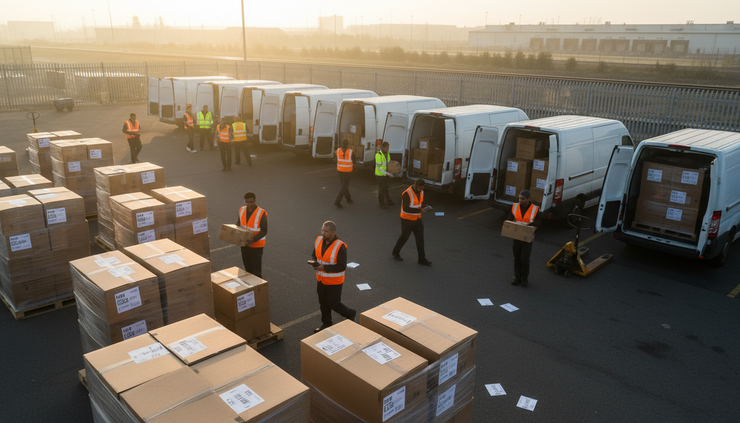
The value of seeing the whole operation at once
The ProSight Process gives businesses more than a live dashboard. It creates a clearer way to manage work across teams, systems, and locations.
When leaders can see the complete operation in real time, they can make decisions earlier, balance capacity better, reduce avoidable delays, and improve service without relying on guesswork. Frontline teams benefit too, because priorities are clearer and fewer problems arrive as surprises.
The real power sits in the connection between visibility and action. Seeing a delay is useful. Seeing it early enough to prevent a missed delivery, idle machine, stockout, or customer complaint is where operational performance improves.
For businesses looking to run with more control and less friction, real-time visibility is no longer a nice extra. It is becoming a practical foundation for smarter operations.


