
Coolmay ProSight Automation 20 Years of Innovation Excellence and Client Success
Factories do not need more automation for its own sake. They need machines that run reliably, data that helps people act faster, and control systems that can grow without turning every upgrade into a costly rebuild.
That is the space Coolmay has worked in for two decades. With around 20 years of manufacturing and automation experience, the company has built its name on practical industrial control products, machine interfaces, and integrated automation solutions. ProSight Automation builds on that background with a clear aim: help machine builders, manufacturers, and systems integrators create smarter, easier-to-manage operations.
ProSight Automation by Coolmay is not framed as a single device doing one job. It is a broader approach to control, visibility, connectivity, and support. For industry teams planning new production lines or modernising older equipment, that matters. The best automation investments are the ones that solve today’s production issues while leaving room for tomorrow’s demands.

Coolmay’s 20 years of experience shape its automation approach
Coolmay’s long run in manufacturing and automation gives it a practical view of what industrial clients need. Automation products do not live in ideal conditions. They sit in machines that run long shifts, face power variation, deal with vibration, and need to be maintained by real technicians under production pressure.
That experience shows up in the way Coolmay positions its solutions. Rather than focusing only on individual components, the company has built capability across several parts of the automation chain, including:
PLC control for machine logic and sequencing
HMI interfaces for operators and maintenance teams
I/O modules for connecting sensors, actuators, and field devices
Integrated PLC and HMI systems for compact machine designs
Remote communication and data access for connected operations
Customised automation support for OEMs and project teams
For machine builders, this mix reduces friction. A panel that combines control and operator interface functions can save space. A familiar programming model can reduce commissioning time. A vendor that understands both device manufacturing and industrial application support can help resolve issues faster.
For manufacturers, long-term experience also matters because automation projects carry risk. A production team may be replacing manual processes, improving throughput, or bringing older equipment into a more connected environment. In each case, reliability matters as much as features.
Coolmay’s two decades in the field give ProSight Automation a grounded base. It is shaped around the jobs industrial teams repeat every day: start a machine safely, adjust parameters, track status, diagnose faults, collect useful data, and keep production moving.
What ProSight Automation brings to modern industrial control
The strongest automation platforms connect several layers of a system without making them harder to manage. ProSight Automation does this by bringing control, visibility, data, and machine connectivity closer together.
That can mean different things depending on the site. For one client, it may involve upgrading a standalone machine with an integrated HMI and PLC. For another, it may mean giving maintenance staff clearer fault information. For a larger manufacturer, it could mean linking production data from multiple machines into a wider plant system.
Integrated PLC and HMI design
One of Coolmay’s key strengths is the combination of programmable logic control and human-machine interface technology. In many industrial systems, the PLC handles machine logic while the HMI gives operators a way to start, stop, adjust, and monitor the process.
Bringing these functions together can reduce panel complexity and simplify machine design. It may also make installation easier for compact equipment, such as packaging machines, filling systems, small assembly stations, test rigs, and environmental control units.
The benefit is not just size. A well-integrated control and interface setup can make machine behaviour easier to understand. Operators can see alarms, operating steps, counts, temperature values, pressure readings, or motor status in one place. Maintenance teams can access fault histories and diagnose problems without searching through separate devices.
Practical connectivity for smarter factories
Connected automation can be powerful, but only when it is designed around real plant needs. ProSight Automation supports the move towards more connected machines by helping users collect and share production information.
This may include machine status, process values, counts, alarms, and maintenance indicators. When this information becomes easier to access, teams can make better decisions about downtime, energy use, product quality, and changeover performance.
Good connectivity also supports remote support. For OEMs with machines installed across different regions, remote visibility can reduce unnecessary site visits. For manufacturers with lean maintenance teams, it can help technicians understand a fault before they open a panel.
Modular systems that match project scale
Automation projects vary widely. A small machine may need a compact controller, a touch interface, a handful of inputs and outputs, and simple communication. A larger system may need more I/O, multiple zones, several screens, and links to drives, sensors, and higher-level software.
ProSight Automation’s value lies in giving teams a path from simple to more advanced systems. That modular mindset helps clients avoid overbuilding early projects while keeping room for growth.
Need | How ProSight Automation can help |
Compact machine control | Combine operator interface and logic control in a smaller footprint |
Clearer fault handling | Display alarms, live values, and step status for faster diagnosis |
Data collection | Capture production and process signals for review and reporting |
OEM repeatability | Support standard machine templates across similar builds |
Future expansion | Add communication, I/O, or interface capability as requirements change |
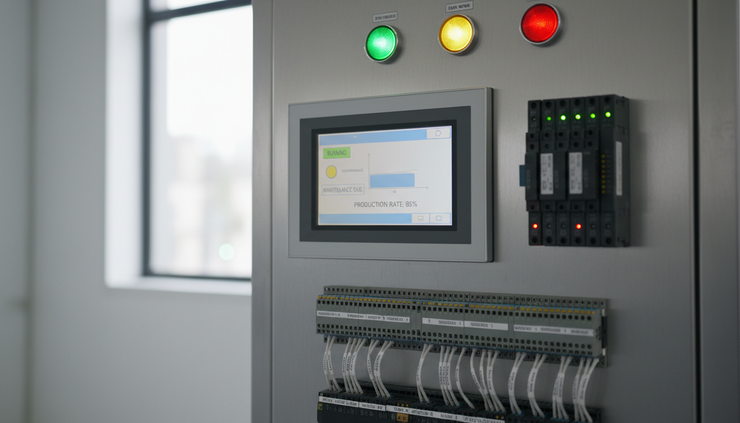
How Coolmay maintains excellence across products and services
Industrial excellence depends on more than a product catalogue. It comes from how devices are designed, tested, documented, supplied, and supported across their working life.
Coolmay’s manufacturing background gives it direct control over many of these factors. That matters because automation components must be consistent. A machine builder cannot afford wide variation from one batch to the next. A plant engineer cannot accept a product that works well during commissioning but becomes hard to maintain later.
Product design with field use in mind
Good automation products are designed around the conditions they will face. That means clear terminals, stable communication, suitable enclosure options, readable displays, practical mounting, and compatibility with common industrial signals.
Coolmay’s experience across PLCs, HMIs, and related modules allows it to think in full-system terms. When control logic, operator screens, and I/O work smoothly together, the whole project becomes easier to deliver.
Testing that reflects industrial expectations
Manufacturers expect automation hardware to handle long operating hours and demanding environments. While every site has its own limits and requirements, strong product testing helps reduce early failures and inconsistent performance.
In practice, this means attention to electrical stability, display durability, communication reliability, and repeatable device behaviour. It also means firmware and software tools need to support clear configuration, easy backups, and dependable operation after changes.
Support that helps projects move
Service quality often decides whether an automation supplier becomes a long-term partner. Project teams need help that is specific, not vague. They need wiring guidance, programming support, application advice, and practical answers during commissioning.
Coolmay’s role can extend from supplying products to helping clients select the right architecture for a machine or production line. This is especially useful for OEMs that build repeat machines. Once a stable control pattern is proven, it can be copied, refined, and supported across multiple installations.
Excellence in automation is measured on the factory floor. It shows up when operators work confidently, maintenance teams find faults faster, and new machines reach stable production sooner.
Client applications show where ProSight Automation creates value
Many automation success stories are not dramatic from the outside. A machine runs with fewer interruptions. A changeover becomes easier. A technician finds a sensor fault in minutes rather than tracing wires for half a shift. These gains add up quickly in production environments.
The following examples reflect common ways clients use Coolmay-style automation solutions. They are described in general terms rather than tied to named companies, but they show where ProSight Automation can make a measurable difference.
A packaging equipment builder standardises machine control
A packaging machine builder needed a repeatable control setup for several machine models. Each machine required motion coordination, operator settings, alarm handling, batch counts, and simple maintenance screens.
By using an integrated PLC and HMI approach, the builder could keep the panel layout compact and use a consistent interface across machines. Operators did not need to learn a completely different screen structure for every model. Technicians could identify machine states and alarms faster.
The strongest result was repeatability. Standardised control architecture made it easier to build, commission, and support each machine. For an OEM, that consistency can protect margins and improve client confidence.
A food processing line improves visibility into stoppages
A food processing operation had several small machines that relied heavily on operator observation. When stoppages occurred, the reason was not always clear. Some faults came from safety interlocks, some from sensor misalignment, and others from downstream delays.
A ProSight-style control and interface setup helped expose those events at the machine level. Operators could see active alarms and machine status immediately. Maintenance workers could review fault information and target the right area first.
This kind of upgrade does not require a complete factory rebuild. Often, the first gain comes from making existing signals visible and understandable.
A water treatment skid gains clearer local control
Water treatment and pumping systems often need dependable control in compact spaces. A skid may include tanks, pumps, valves, level sensors, pressure transmitters, and alarms. Operators need clear status information, while maintenance teams need access to setpoints and fault conditions.
Coolmay’s integrated automation approach suits this type of application because it combines process visibility with local control. A touchscreen interface can display tank levels, pump states, valve positions, and alarm messages. The controller can manage sequencing and safety logic.
For system builders, this supports cleaner panel layouts and easier replication across similar skids.
A small manufacturer prepares for connected production
A manufacturer with several standalone machines wanted better production visibility but was not ready for a full plant-wide software project. The practical first step was to capture key values from selected machines, such as counts, run status, alarm state, and cycle information.
With the right automation platform, those values could be displayed locally and prepared for future data sharing. This staged approach reduces risk. The site starts with the most useful data, learns what matters, and builds from there.

Future automation trends point towards connected and flexible machines
Automation is moving in a clear direction. Machines are becoming more connected, more data-aware, and easier to maintain remotely. At the same time, manufacturers want systems that remain practical, affordable, and manageable by in-house teams.
Coolmay’s role will likely sit at the point where those needs meet. ProSight Automation can help shape future-ready systems by focusing on factory realities rather than abstract technology trends.
More edge intelligence
Factories are collecting more data, but not every decision needs to travel to a cloud platform or central server. Edge intelligence means machines can process key information locally, near the source.
This can support faster alarm handling, local trend display, condition monitoring, and machine-level decisions. For many manufacturers, the edge is where practical digital transformation begins.
Easier remote support
Remote access will keep growing, especially for OEMs and distributed manufacturing sites. When used safely and with proper access controls, remote support can help diagnose faults, update settings, and guide on-site technicians.
This trend does not remove the need for skilled people on the floor. It gives them better support when specialised help is needed.
Better human-machine interaction
The future of automation is not only about sensors and software. It is also about making machines easier for people to operate. Clear screens, useful alarms, intuitive navigation, and well-organised data can reduce errors and training time.
Coolmay’s HMI and control experience gives it a strong base here. A good interface turns machine complexity into clear choices and timely information.
Practical steps towards Industry 4.0
Industry 4.0 can sound large and expensive, but many successful projects start with simple improvements. Connect one line. Record key downtime causes. Display live performance. Add maintenance reminders. Link critical machines to a supervisory system.
ProSight Automation supports this staged path. It gives manufacturers a way to improve today while preparing for more connected operations later.

Coolmay’s value is in practical progress
The best automation partners do more than supply components. They help clients build systems that are reliable, understandable, and ready to grow.
Coolmay’s 20 years in manufacturing and automation give ProSight Automation a strong foundation. Its focus on integrated control, clear machine interfaces, modular architecture, and practical connectivity fits the needs of modern industrial teams. The client value appears in familiar but important ways: quicker troubleshooting, cleaner machine design, better operator visibility, easier repeat builds, and a smoother path towards connected production.
For manufacturers and machine builders planning their next automation step, the main lesson is simple. Start with the outcome that matters most on the floor. Then choose controls, interfaces, and data tools that support that outcome without adding unnecessary complexity.
ProSight Automation points to a future where automation is smarter, but still practical. That is where long-term innovation earns its place: in machines that run better, teams that respond faster, and clients that can keep building with confidence.


