.png)
Innovative Low-Cost Technologies for Efficient Sewage Treatment in Urban Areas
Water pollution is a growing challenge as urban populations expand and industrial activities increase. Freshwater resources are shrinking, and untreated sewage contributes heavily to environmental degradation. Despite the urgent need for effective sewage treatment, many cities struggle with low treatment rates and high pollution management pressures. Traditional sewage treatment methods often require significant capital investment and energy consumption, making them less accessible for widespread use. This situation calls for low-energy, low-cost technologies that can meet stricter water quality standards while reducing operational costs.
One promising approach involves using fluorescent tracer methods combined with automated monitoring and control systems. This blog explores how these technologies work, their benefits, and how they can transform urban sewage treatment.
The Challenge of Urban Sewage Treatment
Urban sewage treatment faces several obstacles:
Limited freshwater resources: As clean water becomes scarcer, recycling and treating wastewater efficiently is critical.
High capital costs: Conventional treatment plants require large investments in infrastructure and chemicals.
Energy consumption: Many treatment processes consume significant energy, increasing operational costs.
Strict regulations: Governments are enforcing tougher water quality standards, demanding better treatment outcomes.
Low treatment rates: Many cities still have inadequate sewage treatment coverage, leading to pollution.
These challenges highlight the need for innovative, cost-effective solutions that can be deployed widely and managed easily.
Fluorescent Tracer Method for Sewage Treatment
The fluorescent tracer method offers a novel way to monitor and control sewage treatment processes. Instead of relying solely on direct chemical measurements, this method uses a fluorescent tracer added to the water. By measuring the concentration of this tracer, the system can indirectly assess water quality and adjust treatment accordingly.
How It Works
A fluorescent tracer is introduced into the sewage or circulating water system.
Sensors detect the tracer concentration through fluorescence measurement.
The data is sent to a control system that analyzes the water quality in real time.
Based on this analysis, the system automatically adjusts the dosing of treatment chemicals.
This approach ensures that chemicals are used efficiently, reducing waste and cost.
Advantages of Fluorescent Tracer Method
Automatic analysis and dosing: Reduces human error and labor costs.
Real-time monitoring: Enables quick response to changes in water quality.
Chemical savings: Optimizes the amount of treatment chemicals used.
Improved treatment efficiency: Maintains water quality within required standards.

Fluorescent tracer sensors provide real-time data to optimize sewage treatment chemical dosing.
System Components and Control Technology
At the heart of this innovative sewage treatment system is the Coolmay QM3G-70FH-24MT-485P all-in-one machine. This device integrates Human-Machine Interface (HMI) and Programmable Logic Controller (PLC) functions to manage the entire dosing process.
Key Features of the Control System
Automatic dosing control: Adjusts chemical dosing based on real-time water quality data.
Manual dosing option: Allows operators to intervene when necessary.
Data collection: Gathers signals from pH meters, ORP meters, conductivity meters, turbidity meters, and other sensors.
RS485 bus communication: Connects multiple instruments to the central controller efficiently.
Process monitoring: Tracks the circulating water system continuously to ensure compliance with standards.
Benefits of Using the Coolmay All-in-One Machine
Cost savings: Reduces chemical use without compromising treatment quality.
Simplified operation: Combines control and monitoring in one device.
Scalability: Suitable for various sizes of sewage treatment plants.
Reliability: Stable communication and control reduce downtime.
Practical Applications and Examples
Several urban areas have started adopting fluorescent tracer methods combined with automated control systems to improve sewage treatment efficiency.
Example 1: Medium-Sized City Treatment Plant
A city with a population of 500,000 implemented this system in its main sewage treatment facility. The result was:
20% reduction in chemical consumption.
Improved compliance with discharge standards.
Lower energy use due to optimized dosing schedules.
Reduced manual labor for monitoring and adjustments.
Example 2: Industrial Park Wastewater Recycling
An industrial park used the fluorescent tracer method to monitor and treat circulating water in cooling towers and wastewater recycling systems. Benefits included:
Real-time detection of contamination spikes.
Automatic adjustment of treatment chemicals.
Extended equipment lifespan due to better water quality.
Cost savings on chemical purchases and maintenance.
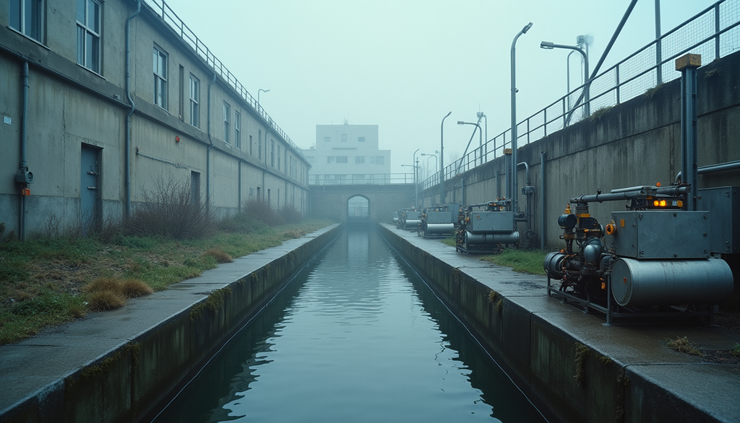
Automated control systems enhance the efficiency of urban sewage treatment plants.
Moving Forward with Economical Sewage Treatment
The fluorescent tracer method combined with advanced control systems like the Coolmay all-in-one machine offers a practical path to more economical and efficient sewage treatment. Cities can meet stricter environmental standards while reducing chemical use and operational costs.
To adopt this technology successfully, urban planners and environmental managers should:
Assess existing treatment infrastructure for compatibility.
Train operators on automated system management.
Monitor performance data to fine-tune dosing parameters.
Plan phased upgrades to integrate sensors and control devices.
By embracing these technologies, urban areas can protect freshwater resources, reduce pollution, and improve public health without excessive spending.


