.png)
How to Choose the Right Electromagnetic Flow Meter for Water and Wastewater in Australia
- 2 hours ago
- 9 min read
Choosing the wrong flow meter can turn a simple water measurement point into a maintenance problem. The meter may be the wrong size, the liner may wear early, the display may fail in a flooded pit, or the signal may not suit the control system.
Electromagnetic flow meters, often called mag meters, are a strong fit for water and wastewater because they have no moving parts and can measure dirty, suspended, or corrosive liquid. They work by measuring voltage induced as a conductive liquid moves through a magnetic field. For clean water, sewage, trade waste, recycled water, and process water, that can give stable measurement with low pressure loss.
The key is matching the meter to the pipe, fluid, site conditions, and control system. Here is what to check before choosing an electromagnetic flow meter Australia suppliers can support for local water and wastewater applications.

Start with the application and fluid
An electromagnetic meter only works with conductive liquid. That makes it suitable for most water and wastewater duties, but not for oils, fuels, gases, steam, or very low-conductivity liquids.
Common applications include:
Potable water transfer
Bore water and raw water intake
Recycled water
Irrigation supply
Sewage pumping mains
Wastewater treatment inlet and outlet lines
Trade waste discharge
Chemical dosing lines where the liquid is conductive
For a clean water flow meter, the main priorities are usually accuracy, approvals, pressure rating, and communication with the control system.
For a wastewater flow meter, the priorities shift. The meter must handle solids, grit, ragging risk, coating, chemical attack, outdoor installation, and possible flooding.
Before looking at models, write down the basic service conditions:
Liquid type
Minimum, normal, and maximum flow rate
Pipe size and material
Pressure and temperature
Conductivity
Solids content
Chemical exposure
Installation location
Required signal output
Flange standard
Power supply
That list will remove many unsuitable options before price enters the discussion.
Match the meter size to pipe diameter and flow range
Pipe diameter is the obvious starting point, but it should not be the only sizing factor. A mag meter is usually selected to match the nominal pipe size, such as DN50, DN100, or DN300. This keeps installation simple and avoids reducers.
The flow range must also suit the meter’s velocity range. Most electromagnetic meters perform best when the liquid velocity sits inside the manufacturer’s recommended limits. Very low velocity can reduce signal strength and make readings less stable. Very high velocity can increase liner wear, noise, and pressure effects.
As a practical guide:
Application | Typical sizing goal | Why it matters |
Potable water | Stable velocity across normal demand | Improves accuracy and low-flow reading |
Wastewater | Enough velocity to keep solids moving | Reduces settlement and coating |
Pumped mains | Check minimum and maximum pump flow | Avoids oversizing the meter |
Batch filling | Choose for the real dosing range | Supports repeatable totals |
Gravity-fed lines | Confirm the pipe stays full | Mag meters need a full pipe |
A common mistake is choosing a meter only because it matches the existing pipe. If the pipe is oversized and normal flow is low, the meter may spend much of its life near the bottom of its measurable range.
For new installations, it can make sense to use reducers and install a smaller meter body, as long as pressure loss, access, and maintenance needs are acceptable. For existing sites, confirm that the pipe will remain full at the measurement point. A partially filled line can give false readings even when the electronics are working correctly.
Choose the right liner for water and wastewater
The liner protects the inside of the meter body and electrically insulates the fluid from the tube. Liner selection affects chemical resistance, abrasion resistance, temperature limits, and service life.
Common liner materials include hard rubber, soft rubber, PTFE, PFA, EPDM, and polyurethane. Manufacturers use different names and grades, so always compare the chemical and temperature ratings on the datasheet.
Liner material | Often used for | Key benefit |
Hard rubber | Water, raw water, many wastewater duties | Good general-purpose choice |
Soft rubber | Water and mildly abrasive fluids | Good flexibility and wear resistance |
EPDM | Potable water and general water service | Good water compatibility |
PTFE or PFA | Chemical or corrosive service | Strong chemical resistance |
Polyurethane | Slurries and abrasive wastewater | Good abrasion resistance |
For potable water, check whether the liner material is suitable for drinking water service under the relevant project requirements. For wastewater, look closely at grit, sand, and suspended solids. A liner that performs well in clean water may not be the best choice for abrasive sludge or stormwater with sediment.
Chemical exposure also matters. Trade waste may include cleaning chemicals, acids, alkalis, salts, or solvents. If the waste stream varies, be conservative and provide the supplier with the worst-case composition.
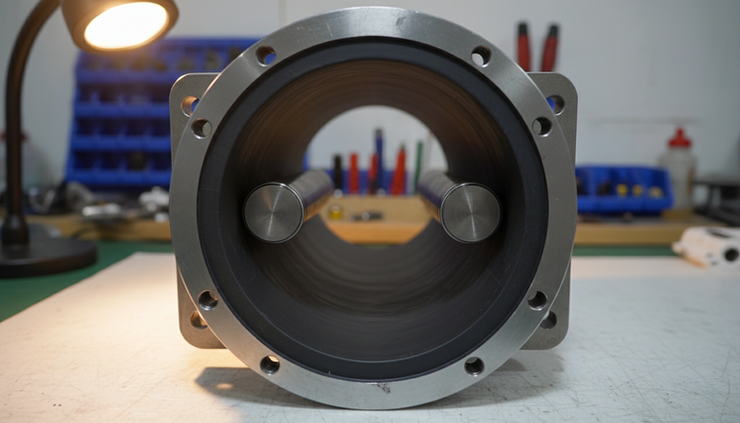
Select electrode materials for the liquid chemistry
Electrodes make contact with the liquid and pick up the induced voltage. If the electrode material is wrong, the meter can suffer from corrosion, coating, unstable signal, or early failure.
Common electrode materials include:
316L stainless steel
Often used for clean water, potable water, and many general wastewater applications.
Hastelloy
Often selected for more aggressive wastewater or chemical exposure, depending on the chemistry.
Titanium
Used where chloride resistance suits the application, subject to the actual process conditions.
Tantalum
Used for some highly corrosive acids, but it is usually a specialist and higher-cost choice.
Do not select electrodes from a generic preference list. Match them to pH, chloride level, chemical additives, cleaning agents, and temperature. If the site handles trade waste, ask for a chemical compatibility check.
Coating is another issue. Fats, oils, biological growth, and minerals can build up on electrodes. Some meters offer self-cleaning electrode designs, replaceable electrodes, or diagnostics that detect coating. Those features can be useful in wastewater treatment plants and pump stations where access is difficult.
Confirm conductivity before ordering
Electromagnetic meters need minimum liquid conductivity to work. Most water and wastewater applications have enough conductivity, but do not assume.
Potable water, groundwater, recycled water, and sewage usually sit comfortably within typical mag meter requirements. Very pure water, condensate, demineralised water, or some treated process water may not.
Check the meter datasheet for the minimum conductivity, often stated in microsiemens per centimetre. Then compare that with the expected minimum conductivity of the liquid, not just the average value.
Conductivity can change with:
Source water changes
Rainfall dilution
Seasonal treatment changes
Chemical dosing
Industrial discharge
Blending of water streams
Earthing also affects signal quality. Conductive metal pipework may provide a stable reference, but plastic, lined, or coated pipes often need earthing rings or grounding electrodes. Poor earthing can look like a faulty meter when the real issue is installation.
Check flange standards and pressure ratings used in Australia
Australian water and wastewater assets may use several flange standards. Common project requirements can include AS 4087, AS 2129, AS/NZS-related waterworks specifications, or international standards such as EN, ANSI, or JIS depending on the plant, package equipment, or imported skid.
Do not assume that “DN100 flanged” is enough information. Specify:
Nominal diameter
Flange drilling standard
Pressure class
Face type
Gasket type
Bolt material requirements
Pipe material
Coating requirements
AS 4087 is common in Australian water infrastructure, especially for waterworks applications, but older sites may still use AS 2129 tables. Imported equipment may arrive with PN16, ANSI 150, or other patterns. If the drilling pattern is wrong, installation stops until adaptors or spool pieces are made.
Pressure rating also matters. The meter body, liner, flanges, and gaskets must suit operating pressure, surge pressure, and test pressure. Pumped wastewater mains can see pressure spikes, so design for the real site conditions rather than only normal operating pressure.

Decide how much accuracy the process needs
Accuracy claims can be confusing because manufacturers state them in different ways. Many mag meters quote accuracy as a percentage of reading, sometimes with conditions such as minimum velocity, full pipe, proper earthing, and a required straight pipe length.
Typical water and wastewater applications may only need reliable totalisation and flow trend data. Custody transfer, dosing control, discharge reporting, and compliance monitoring usually need higher accuracy and better documentation.
Look at these points:
Accuracy at low flow
A meter may meet its headline accuracy at normal flow but perform less well near the bottom of its range.
Repeatability
For batching and dosing, repeatability can matter as much as absolute accuracy.
Calibration certificate
Some projects require wet calibration evidence from the factory.
Bidirectional measurement
Some sites need to measure forward and reverse flow.
Totaliser resolution
Make sure the displayed and transmitted total suits reporting needs.
Also check the installation instructions. Straight pipe runs, valve position, pump turbulence, air entrainment, and grounding can all affect real-world accuracy. A high-accuracy meter installed badly will not deliver high-accuracy data.
Choose the right IP rating for the site
Water and wastewater meters often live in harsh places. A meter may sit in a chamber that floods, a pit with condensation, a coastal site with salt air, or a treatment plant exposed to sun and rain.
The IP rating tells you how well the enclosure resists dust and water ingress. Common ratings include:
Rating | General meaning | Suitable situations |
IP65 | Protected against dust and water jets | Sheltered plant areas |
IP67 | Temporary immersion protection | Outdoor or wet areas with splash risk |
IP68 | Continuous immersion protection under stated conditions | Flood-prone pits or chambers |
IP68 does not mean unlimited underwater service in every condition. Check the depth, duration, cable gland requirements, and whether the transmitter, sensor, or both carry the rating.
Cable entries are often the weak point. Use correct glands, seal unused entries, and avoid water tracking down the cable into the enclosure. In pits, a remote display can keep the electronics above flood level while the sensor remains in the pipe.
Choose between integral and remote displays
An electromagnetic flow meter can have an integral transmitter mounted directly on the sensor, or a remote transmitter installed away from the pipe.
Integral display | Remote display |
Compact and simple | Better for pits, heat, vibration, or flooding |
Lower installation cost | Easier to read and maintain |
Fewer cables | Keeps electronics away from harsh conditions |
Good for accessible indoor pipework | Better for buried or awkward pipework |
Integral displays suit clean, accessible installations such as pump rooms, skid-mounted systems, and sheltered pipe galleries.
Remote displays suit many wastewater and outdoor applications. If the sensor is in a below-ground chamber or a submerged location, a remote transmitter mounted at eye level can make operation far easier.
Check the maximum cable length allowed between sensor and transmitter. Use the cable type specified by the manufacturer, especially for low-level signal cables. Running sensor cables beside high-power motor cables can introduce noise.

Specify the signal outputs before installation
Flow meters rarely work alone. They usually connect to a PLC, SCADA system, data logger, telemetry unit, pump controller, or dosing system.
Common outputs include:
4–20 mA
A standard analogue signal for instantaneous flow rate. It is simple, widely supported, and useful for control loops.
Pulse output
Used for totalised volume. Each pulse represents a set volume, such as litres or kilolitres.
RS485
Often used with Modbus RTU for digital communication. It can transmit flow, totals, diagnostics, alarms, and status data.
Many sites use more than one output. For example, 4–20 mA may feed the PLC for live flow control, while pulse output feeds a totaliser. RS485 may provide diagnostics to SCADA.
Specify these details early:
Power supply, such as mains or 24 V DC
Output type and scaling
Pulse value and pulse width
Communication protocol
Cable distance
Earthing and shielding
Alarm outputs
Flow direction settings
Local display units, such as L/s, m³/h, ML/d, or kL
For remote assets, low-power options may matter. Some meters suit battery or solar-powered telemetry, but not every mag meter is designed for that duty.
Do not overlook installation conditions
A good meter selection still needs a good installation. The pipe should stay full, the sensor should be correctly earthed, and the meter should be placed away from conditions that cause unstable flow.
Check the manufacturer’s requirements for:
Upstream and downstream straight pipe lengths
Installation near pumps, elbows, tees, and valves
Vertical or horizontal orientation
Air pocket avoidance
Full pipe conditions
Access for removal
Sun and weather protection
Cable routing
Earthing rings or grounding straps
For wastewater, vertical upward flow is often preferred where practical because it helps keep the pipe full and reduces solids settlement. In horizontal installations, avoid placing electrodes at the very top or bottom of the pipe if the manufacturer gives orientation guidance. This helps avoid air bubbles at the top and sediment at the bottom affecting the electrodes.
A practical selection checklist
Before issuing a purchase order, confirm these items:
Pipe size and required meter bore
Minimum, normal, and maximum flow range
Liquid conductivity
Liner material
Electrode material
Flange standard and pressure class
Accuracy requirement
IP rating for the sensor and transmitter
Integral or remote display
Output signals, including 4–20 mA, RS485, and pulse
Power supply
Earthing method
Calibration and documentation requirements
Installation position and straight pipe availability
Access for maintenance
If any item is uncertain, pause and clarify it. Guessing usually costs more than checking.
The right choice balances process, site, and signal
A good electromagnetic flow meter is not just the one with the best datasheet accuracy. It is the one that fits the pipe, handles the fluid, survives the location, and sends the right information to the control system.
For clean water, focus on sizing, accuracy, approvals, and integration. For wastewater, give extra attention to liner wear, electrode material, coating risk, IP rating, and display location.
Get the fundamentals right and the meter should become a reliable part of the asset, not another instrument that needs constant attention.


