.png)
Exploring Diverse Pressure Measurement Types and Their Unique Applications
Pressure measurement plays a crucial role across many industries, from manufacturing to healthcare. Different environments and substances require specialised devices to accurately monitor pressure levels. Understanding the types of pressure measurement devices and their applications helps ensure safety, efficiency, and reliability in various systems. This post explores the main categories of pressure measurement devices, focusing on the substances they measure and the specific conditions they are designed for.

Pressure Transducers Classified by the Substance They Measure
Pressure transducers convert pressure into an electrical signal for monitoring and control. They are often classified by the type of substance whose pressure they measure. Here are some common types:
Water Pressure Transducers
Water pressure transducers monitor the pressure within water-based systems. These devices are frequently found attached to water tanks, pipelines, and pumps. They help maintain proper water pressure to avoid system failures or leaks. For example, in municipal water supply systems, these transducers ensure consistent pressure to homes and businesses.
Gas Pressure Transmitters
Gas pressure transmitters measure the pressure of gases such as natural gas, propane, or industrial gases. These devices are essential in factories and manufacturing plants to monitor gas flow rates and maintain safety standards. For instance, in a chemical plant, gas pressure transmitters help regulate the pressure in pipelines carrying flammable gases, reducing the risk of leaks or explosions.
Fuel pressure gauges are a specialised form of gas pressure measurement used in automobiles. They display the fuel supply pressure in vehicle tanks, helping drivers and mechanics monitor fuel levels and engine performance.
Air Pressure Sensors
Air pressure sensors measure pneumatic pressure in air-operated equipment. These sensors are common in automation systems, HVAC units, and pneumatic tools. For example, in an automated assembly line, air pressure sensors ensure that pneumatic actuators operate within safe pressure limits to avoid damage or malfunction.
Oil Pressure Transducers
Oil pressure transducers monitor the pressure of oil circulating in lubrication systems. These devices are critical in engines and heavy machinery to ensure proper lubrication and prevent mechanical wear. For example, in a large diesel engine, oil pressure transducers alert operators if oil pressure drops below safe levels, preventing engine damage.
Pressure Transmitters Designed for Specific Conditions
Some pressure measurement devices are designed to operate under particular environmental conditions or pressure ranges. These include:
Vacuum Pressure Gauges
Vacuum pressure gauges measure pressure in systems operating below atmospheric pressure. These gauges are used in vacuum chambers, refrigeration systems, and scientific research. Vacuum environments are often necessary to create very low temperatures or to conduct experiments free from air interference.
For example, in semiconductor manufacturing, vacuum pressure gauges monitor the vacuum levels inside deposition chambers to ensure the quality of thin films applied to wafers.
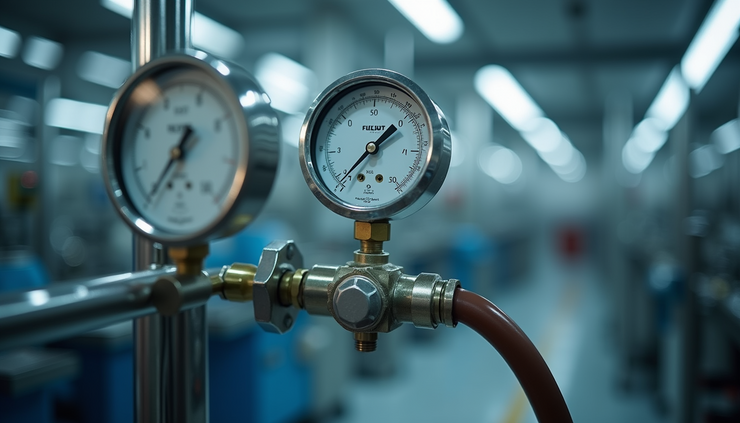
Practical Applications of Pressure Measurement Devices
Understanding the right pressure measurement device for each application is vital for system performance and safety. Here are some practical examples:
Water Treatment Plants: Water pressure transducers maintain consistent pressure in filtration and distribution systems, preventing pipe bursts and ensuring clean water delivery.
Oil and Gas Industry: Gas pressure transmitters monitor pipeline pressures to detect leaks and maintain flow rates, while oil pressure transducers protect machinery by ensuring proper lubrication.
Automotive Industry: Fuel pressure gauges provide real-time fuel supply data to optimise engine performance and fuel efficiency.
Manufacturing Automation: Air pressure sensors control pneumatic tools and actuators, ensuring smooth operation and reducing downtime.
Scientific Research: Vacuum pressure gauges enable experiments under controlled low-pressure conditions, critical for material science and physics studies.
Choosing the Right Pressure Measurement Device
Selecting the appropriate pressure measurement device depends on several factors:
Substance Type: Water, gas, air, or oil require different sensor designs and materials.
Pressure Range: Devices must handle the expected pressure levels, from vacuum to high pressure.
Environmental Conditions: Temperature, humidity, and chemical exposure affect sensor choice.
Accuracy Requirements: Some applications demand high precision, while others tolerate broader ranges.
Installation Constraints: Size, mounting options, and electrical compatibility matter for integration.
Consulting with manufacturers and reviewing technical specifications helps match devices to specific needs.


