Decoding the Role of Remote Telemetry Units in Industrial Monitoring
- 1 day ago
- 4 min read
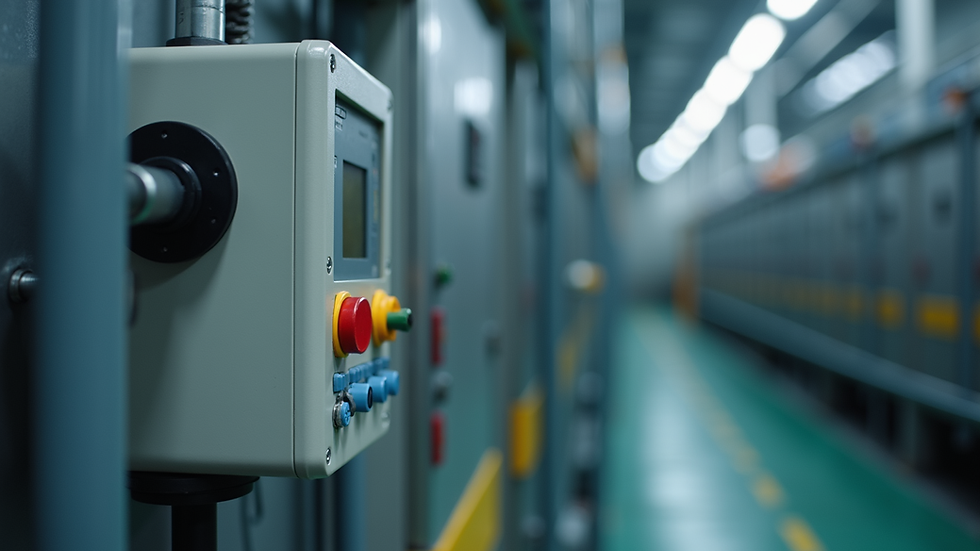
Remote Telemetry Units (RTUs) have become essential tools in modern industrial monitoring and automation. They provide a reliable way to collect, transmit, and manage data from remote or hard-to-reach locations. This capability is critical for industries such as manufacturing, mining, water treatment, logistics, and construction, where continuous monitoring ensures safety, compliance, and operational efficiency.
This article explores the role of RTUs, how they work, and their applications across various industries. It also highlights how integrated solutions involving sensors, data loggers, and communication technologies can enhance industrial operations.
Understanding Remote Telemetry Units and Their Function
A remote telemetry unit is a device that collects data from sensors or instruments and transmits it to a central system for monitoring and analysis. RTUs act as the bridge between physical equipment and digital control systems, enabling real-time visibility and control over industrial processes.
RTUs typically gather data such as temperature, pressure, flow rates, or electrical parameters. They then send this information via communication networks like Radio Signal, LoRaWAN, 4G/5G, or USB download to a control centre or cloud platform.
The question of what is a remote telemetry unit often arises among operations managers and engineers. In simple terms, it is a compact, rugged device designed to operate in harsh environments while providing accurate and timely data transmission.
How RTUs Support Industrial Monitoring and Automation
Remote telemetry units play a vital role in smart monitoring and industrial automation. They enable businesses to:
Monitor equipment remotely: RTUs collect data from sensors installed on machinery or infrastructure, allowing operators to track performance without being physically present.
Improve compliance: Automated data collection helps meet regulatory requirements by providing accurate records of environmental conditions, process parameters, or safety metrics.
Reduce downtime: Early detection of anomalies through continuous monitoring allows for proactive maintenance, preventing costly breakdowns.
Enhance decision-making: Real-time data supports informed decisions to optimise operations and resource use.
For example, in water and wastewater management, RTUs monitor flow rates and chemical levels to ensure treatment processes meet standards. In mining, they track equipment status and environmental conditions to maintain safety and productivity.
Key Technologies Behind RTUs
RTUs rely on several technologies to function effectively in industrial settings:
Sensors and Instruments: These detect physical or chemical changes and convert them into electrical signals. ProSense offers a range of sensors and handheld instruments designed for accuracy and durability.
Communication Networks: Data transmission can use various methods depending on site conditions. Radio Signal and LoRaWAN provide low-power, long-range wireless communication ideal for remote sites. 4G/5G networks offer high-speed connectivity where coverage exists. USB download remains useful for manual data retrieval in some cases.
Data Loggers and Software: Data loggers store collected information locally and transmit it when communication is available. Software platforms aggregate data for analysis, reporting, and alerting.
Together, these components form an end-to-end system that supports industrial monitoring from sensor to system.

Applications of RTUs Across Industries
Remote telemetry units find use in many sectors, each with specific monitoring needs:
Manufacturing and Heavy Industry
RTUs monitor machine conditions such as temperature, vibration, and electrical load. This data helps prevent failures and optimise production lines.
Shipping and Logistics
Tracking container conditions like temperature and humidity ensures product quality during transport. RTUs provide real-time updates to logistics managers.
Mining and Construction
Environmental monitoring for dust, gas, and equipment status improves safety and regulatory compliance. RTUs enable remote site management.
Food and Beverage
Temperature and humidity control in storage and processing areas maintain product safety and quality. RTUs automate data collection for audits.
Water and Wastewater
Flow, pressure, and chemical levels are monitored continuously to maintain treatment standards and detect leaks or faults early.
Facilities Management
Building systems such as HVAC, lighting, and power usage are monitored to improve energy efficiency and occupant comfort.
Integrating ProSense Solutions for Reliable RTU Systems
ProSense specialises in providing industrial-grade IoT and monitoring solutions that include sensors, data loggers, and communication systems compatible with RTUs. Two examples illustrate how these products support remote telemetry applications:
LoRaWAN Data Logger
This device collects sensor data and transmits it over a low-power, long-range LoRaWAN network. It suits remote sites where power and connectivity are limited. The data logger supports multiple sensor types and integrates with cloud platforms for real-time monitoring.
4G/5G Industrial Router
Designed for sites with cellular coverage, this router provides secure, high-speed data transmission from RTUs to central systems. It supports multiple communication protocols and ensures reliable connectivity in demanding environments.
By combining these products with custom engineering and software integration, ProSense delivers tailored solutions that meet the specific needs of industries requiring remote telemetry.
Benefits of Using RTUs with Advanced Sensors and Communication
Using RTUs alongside modern sensors and communication technologies offers several advantages:
Scalability: Systems can expand easily by adding more sensors or RTUs without major infrastructure changes.
Flexibility: Different communication options allow deployment in diverse environments, from underground mines to remote farms.
Data Accuracy: High-quality sensors and reliable data loggers ensure precise measurements for compliance and analysis.
Reduced Manual Work: Automated data collection cuts down on manual checks, saving time and reducing errors.
Improved Uptime: Early warnings from continuous monitoring help schedule maintenance before failures occur.

Choosing the Right RTU Solution
Selecting an RTU system depends on factors such as:
Environment: Harsh conditions require rugged devices with appropriate ingress protection.
Communication Availability: Choose between wireless options like LoRaWAN or cellular networks based on site coverage.
Data Requirements: Consider the number and type of sensors, data frequency, and storage needs.
Integration Needs: Ensure compatibility with existing control systems and software platforms.
ProSense offers engineering support to design and implement RTU solutions tailored to these requirements, ensuring reliable performance and ease of use.
Remote telemetry units are vital components in modern industrial monitoring and automation. They provide the data and connectivity needed to keep operations running smoothly, safely, and efficiently. By integrating RTUs with advanced sensors, data loggers, and communication technologies, businesses can gain real-time insights and control over their processes.
For Australian industries facing challenges in remote monitoring, ProSense delivers practical, scalable solutions that simplify data collection and improve operational outcomes. Exploring products like the LoRaWAN Data Logger and 4G/5G Industrial Router can be the first step toward smarter, more connected operations.


