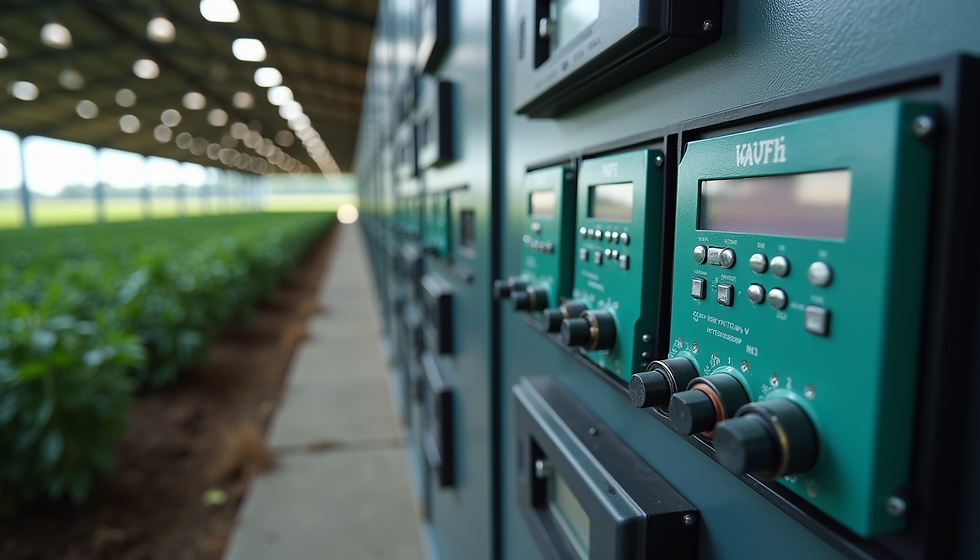
Leveraging Weather Stations to Enhance Irrigation Strategies for Smart Farming
- 2 days ago
- 3 min read
Water management remains one of the most critical challenges in agriculture. Overwatering wastes resources and harms crops, while underwatering reduces yields and soil health. Weather stations that collect real-time data on rainfall, temperature, and soil conditions offer farmers a practical way to make smarter irrigation decisions. This post explores how combining these data points supports efficient water use and healthier crops.

How Weather Stations Improve Irrigation Decisions
Traditional irrigation often relies on fixed schedules or visual inspection, which can be inaccurate and wasteful. Weather stations provide continuous, localized data that reflect actual field conditions. This allows farmers to:
Adjust irrigation timing based on recent rainfall and soil moisture levels
Modify water volume according to temperature-driven evaporation rates
Prevent overwatering by detecting sufficient natural precipitation
Identify dry spots in fields through soil moisture sensors
By integrating these data streams, farmers can tailor irrigation to crop needs and environmental conditions, reducing water use and improving yields.
Key Data Points from Weather Stations
Rainfall Measurement
Rain gauges in weather stations track the amount and intensity of precipitation. This data helps farmers know when natural rainfall has met crop water needs, avoiding unnecessary irrigation. For example, after a heavy rain event, irrigation can be delayed until soil moisture drops below optimal levels.
Temperature Monitoring
Air temperature influences how quickly water evaporates from soil and plants. Higher temperatures increase water demand. Weather stations provide hourly temperature readings, enabling farmers to anticipate irrigation needs during heat waves or cooler periods.
Soil Moisture Sensors
Soil moisture sensors measure the water content in the root zone. This is the most direct indicator of whether crops have enough water. Combining soil moisture data with rainfall and temperature gives a complete picture of water availability and demand.
Practical Applications on the Farm
Case Study: Vineyard Water Management
A vineyard in California installed weather stations across different blocks to monitor microclimates. By analyzing rainfall, temperature, and soil moisture data, the vineyard manager adjusted irrigation schedules block-by-block. This approach saved 20% of water compared to previous uniform irrigation while maintaining grape quality.
Precision Irrigation Systems
Modern irrigation systems can connect directly to weather stations. When soil moisture drops below a set threshold or temperature rises, the system activates irrigation automatically. This reduces labor and ensures crops receive water only when needed.
Drought Preparedness
During dry spells, weather stations alert farmers to declining soil moisture and rising temperatures early. This allows proactive irrigation planning, protecting crops from stress and yield loss.
Benefits Beyond Water Savings
Using weather stations for irrigation decisions also supports:
Soil health by preventing waterlogging and erosion
Energy savings through reduced pump operation
Improved crop quality by maintaining optimal moisture levels
Environmental protection by minimising runoff and nutrient leaching
Farmers gain a clearer understanding of their fields’ water dynamics, leading to smarter, more sustainable practices.

Getting Started with Weather Stations on Your Farm
Choose the right system: Select weather stations with rainfall, temperature, and soil moisture sensors suitable for your crop type and field size.
Install strategically: Place sensors in representative locations to capture variations in soil and microclimate.
Integrate with irrigation: Connect weather data to irrigation controllers or use mobile apps for manual adjustments.
Monitor regularly: Review data daily to make informed irrigation decisions and adjust thresholds as needed.
Train your team: Ensure farm workers understand how to interpret data and operate connected irrigation systems.
Final Thoughts
Weather stations provide farmers with detailed, real-time insights into rainfall, temperature, and soil moisture. This information supports smarter irrigation decisions that save water, protect crops, and improve farm sustainability. By adopting these tools, farmers can respond quickly to changing conditions and manage water resources more effectively.