.png)
Enhancing Water Supply Management in High-Rise Buildings with IoT Booster Pump Systems
Water supply in high-rise buildings faces unique challenges. Ensuring consistent pressure and flow to every floor requires more than just a standard water line. Booster pump systems play a critical role in maintaining reliable water delivery in residential towers, commercial complexes, and hotels. Managing these systems across multiple locations, however, can be complex and resource-intensive. The integration of IoT and wireless technology offers a practical solution to monitor and control booster pump systems remotely, improving efficiency and reducing downtime.
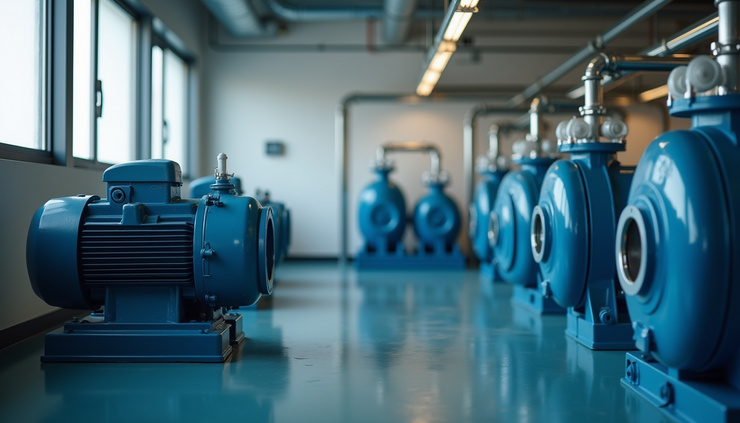
Understanding Booster Pump Systems in High-Rise Buildings
A typical booster pump system includes several key components:
Booster pumps that increase water pressure to reach upper floors.
Water tanks that store and regulate water supply.
Control rooms where system operations are monitored and managed.
Each component requires continuous monitoring to ensure optimal performance. Pressure, flow rate, water level, and water quality must be tracked to prevent failures or interruptions. Traditionally, this monitoring involved manual checks or localised control systems, which are inefficient for large-scale or multi-site operations.
How IoT Improves Monitoring and Control
IoT technology connects sensors, programmable logic controllers (PLCs), and cameras to a central network, enabling real-time data collection and remote management. In booster pump systems, this setup typically includes:
Sensors that measure water level, flow, and quality inside tanks.
PLCs that control pump operations based on sensor data.
IP cameras that provide visual monitoring of pump rooms.
An industrial router with 4G LTE connectivity to transmit data securely to remote control centres.
For example, the Bivocom TR321 industrial 4G router supports Ethernet and serial ports (RS232/RS485), allowing seamless integration with PLCs and sensors. This router sends all collected data to a central control room via cellular networks, eliminating the need for wired connections and enabling flexible installation.
Benefits of Remote Booster Pump Monitoring
Using IoT and wireless technology to monitor booster pump systems offers several advantages:
Real-time alerts for abnormal pressure, flow, or water quality, allowing quick response to issues.
Reduced maintenance costs by predicting failures before they happen.
Improved water supply reliability by ensuring pumps operate within optimal parameters.
Remote access to system status, reducing the need for onsite visits.
Enhanced security through IP camera monitoring of pump rooms.
These benefits translate into better service for building occupants and lower operational expenses for water supply companies.

Practical Example: Managing Multiple Booster Pump Sites
A water supply company managing booster pump systems across a city can face challenges such as:
Monitoring water quality in tanks located in different neighbourhoods.
Ensuring pumps operate efficiently during peak demand hours.
Quickly identifying and fixing equipment failures.
By installing sensors and PLCs connected to industrial routers like the Bivocom TR321, the company can collect data from all sites in one control room. Operators receive instant notifications if water levels drop or if a pump shows signs of malfunction. Cameras provide visual confirmation without sending technicians onsite unnecessarily.
This setup allows the company to:
Schedule maintenance based on actual equipment condition.
Adjust pump operation remotely to balance supply and demand.
Maintain consistent water pressure for all customers.
Key Considerations When Implementing IoT Booster Pump Systems
To maximise the benefits of IoT monitoring, consider the following:
Reliable network connectivity: Choose routers with strong cellular support and backup options.
Sensor accuracy and placement: Properly install sensors to capture precise data.
Data security: Protect transmitted data with encryption and secure access controls.
Integration with existing systems: Ensure PLCs and sensors are compatible with the router and control software.
User-friendly interfaces: Provide operators with clear dashboards and alert systems.


