.png)
Advanced Manufacturing Technologies for Modern Industries
Updated: Jan 28
In today’s fast-evolving industrial landscape, the integration of advanced manufacturing technologies is no longer optional but essential. These technologies enable industries to enhance productivity, ensure compliance, and maintain operational reliability. From manufacturing and mining to food and beverage and water treatment, modern industries demand solutions that deliver real-time data, automation, and seamless connectivity.
At ProSense, we specialise in providing end-to-end industrial monitoring and automation solutions. Our expertise spans IoT sensors, data loggers, wireless communication technologies like LoRaWAN and 4G/5G, and custom engineering systems designed to meet the rigorous demands of diverse sectors. This article explores how advanced manufacturing technologies are transforming operations and driving smarter, data-driven decision-making.
The Role of Advanced Manufacturing Technologies in Industry
Advanced manufacturing technologies encompass a broad range of tools and systems designed to optimise production processes, improve quality control, and reduce downtime. These technologies include smart sensors, wireless monitoring, automation software, and integrated data platforms.
Key Benefits of Advanced Manufacturing Technologies
Improved Operational Efficiency: Real-time monitoring allows for proactive maintenance and rapid response to anomalies.
Enhanced Compliance: Automated data collection ensures accurate reporting and adherence to regulatory standards.
Reduced Downtime: Predictive analytics and remote monitoring minimise unexpected equipment failures.
Scalability: Modular systems can grow with your business needs, from simple sensor setups to fully integrated Industry 4.0 solutions.
Data-Driven Insights: Access to reliable data supports informed decision-making and continuous improvement.
For example, in the food and beverage sector, temperature and humidity sensors connected via LoRaWAN networks enable continuous monitoring of storage conditions, ensuring product safety and compliance with health regulations. Similarly, in mining and heavy industry, rugged wireless sensors provide critical data on equipment health and environmental conditions, reducing risk and improving safety.
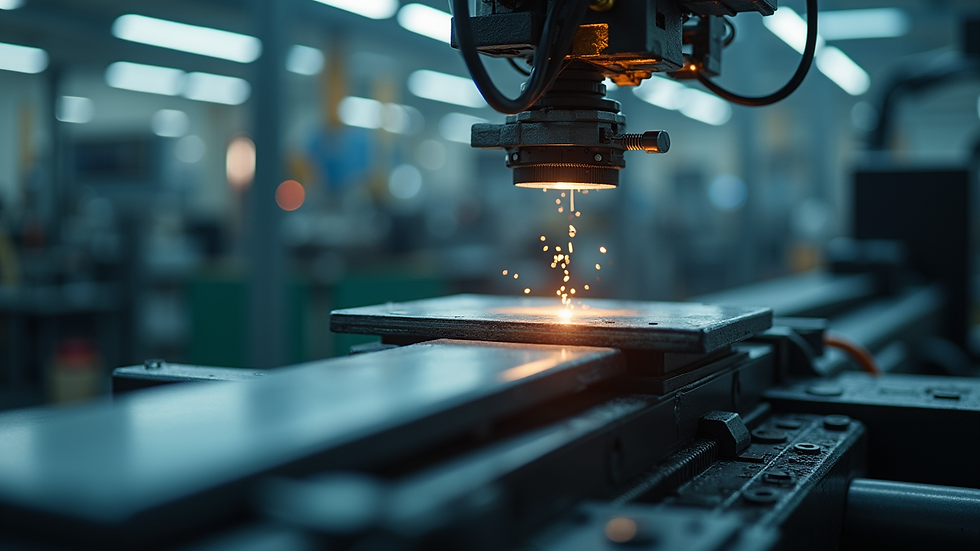
Exploring Advanced Manufacturing Technologies in Practice
Advanced manufacturing technologies are not just theoretical concepts; they are practical tools that deliver measurable outcomes. Here are some core components and their applications:
IoT Sensors and Data Loggers
IoT sensors capture vital parameters such as temperature, pressure, vibration, and humidity. Data loggers store this information locally or transmit it wirelessly for real-time analysis. ProSense’s sensors utilise multiple communication protocols including Radio Signal, LoRaWAN, 4G/5G, and USB download options, ensuring flexibility across different environments.
Wireless Monitoring Systems
Wireless monitoring eliminates the need for extensive cabling, reducing installation costs and complexity. LoRaWAN technology, in particular, offers long-range, low-power connectivity ideal for large industrial sites or remote locations. This technology supports continuous data flow from sensors to central management platforms.
Industrial Automation and Integration
Automation systems integrate sensor data with control equipment to enable automatic adjustments and alerts. Custom engineering solutions can connect disparate systems, creating a unified platform for monitoring, control, and reporting. This integration is critical for industries requiring high reliability and compliance, such as pharmaceuticals and water treatment.
Software and Data Visualisation
Data collected from sensors and instruments is only valuable if it can be interpreted effectively. ProSense provides software solutions that visualise data trends, generate compliance reports, and support predictive maintenance strategies. These tools empower operators and managers to make timely, informed decisions.

What are advanced manufacturing systems?
Advanced manufacturing systems refer to the combination of hardware, software, and communication technologies that work together to optimise production and operational processes. These systems integrate sensors, data acquisition devices, communication networks, and automation controls to create a cohesive environment for monitoring and managing industrial activities.
Characteristics of Advanced Manufacturing Systems
Interconnectivity: Devices and systems communicate seamlessly across wired and wireless networks.
Real-Time Data Access: Continuous data streams enable immediate insights and rapid response.
Automation: Automated control loops reduce manual intervention and improve consistency.
Scalability and Flexibility: Systems can be tailored to specific industry needs and expanded as operations grow.
Robustness: Designed to operate reliably in harsh industrial environments.
For instance, in the water and wastewater industry, advanced manufacturing systems monitor chemical dosing, flow rates, and equipment status remotely. This capability ensures compliance with environmental regulations and optimises resource use.
Implementation Considerations
Compatibility: Ensure sensors and instruments are compatible with existing infrastructure.
Data Security: Protect sensitive operational data through secure communication protocols.
User Training: Equip staff with the knowledge to interpret data and manage systems effectively.
Maintenance: Plan for regular calibration and servicing of instruments to maintain accuracy.
Industry Applications of Advanced Manufacturing Technologies
The versatility of advanced manufacturing technologies allows them to be applied across a wide range of industries. Below are examples illustrating their impact:
Manufacturing and Industry 4.0
Smart sensors and automation systems enable manufacturers to monitor machine health, track production metrics, and automate quality control. This leads to reduced waste, improved throughput, and enhanced product consistency.
Cold Chain, Food & Beverage
Temperature and humidity monitoring throughout the supply chain ensures product integrity from production to delivery. Wireless data loggers provide continuous visibility, supporting compliance with food safety standards.
Water and Wastewater Management
Remote monitoring of pumps, valves, and chemical dosing systems improves operational efficiency and regulatory compliance. Data-driven insights help optimise energy use and reduce environmental impact.
Construction and Mining
Rugged sensors monitor equipment performance and environmental conditions on-site. Wireless communication enables real-time alerts, enhancing safety and reducing downtime.
Energy and Utilities
Advanced monitoring supports predictive maintenance of critical infrastructure such as power plants and substations. Integration with SCADA systems facilitates comprehensive control and reporting.
How ProSense Supports Advanced Manufacturing Technologies
ProSense offers a comprehensive suite of products and services designed to meet the needs of modern industries. Our approach focuses on delivering reliable, scalable, and compliant solutions that simplify data collection and enhance operational visibility.
Solutions
IoT sensors and data loggers tailored for industrial environments.
LoRaWAN and cellular communication systems for flexible connectivity.
Software platforms for data visualisation, reporting, and analytics.
Instruments
Handheld meters and field tools for accurate onsite measurements.
Calibration and maintenance support to ensure instrument reliability.
Engineering
Custom automation and integration services.
Electrical system design and installation.
Ongoing technical support and system optimisation.
By partnering with ProSense, businesses can leverage advanced manufacturing technologies to reduce downtime, improve compliance, and enable smarter decision-making.
Driving Operational Excellence with Smart Monitoring
The future of industrial operations lies in the ability to monitor, automate, and visualise processes with precision and reliability. Implementing advanced manufacturing technologies is a strategic investment that delivers tangible benefits:
Reduced Operational Costs through predictive maintenance and energy optimisation.
Improved Product Quality by maintaining consistent environmental conditions.
Enhanced Safety via real-time alerts and remote monitoring.
Regulatory Compliance supported by automated data logging and reporting.
Scalable Growth enabled by modular and flexible system architectures.
For businesses seeking to modernise their operations, adopting advanced manufacturing solutions is a critical step towards achieving operational excellence and future-proofing their industrial processes.
By embracing these technologies, industries can transform their operations to meet the challenges of today and tomorrow with confidence and efficiency.


